
Glossary Of Sanskrit Terms
Glossary Of Sanskrit Terms
Abhiseka
a bathing ceremony, particularly for the coronation of a king or the installation of the Lord's Deity form.
Acyuta
the Supreme Lord, who can never fall down from His position.
Advaita Prabhu
an incarnation of Visnu who appeared as a principal associate of Lord Caitanya Mahaprabhu.
Ajamila
a fallen [brahmana] who was saved from hell by chanting the name of Lord Narayana at the time of death
Ananda
spiritual bliss.
Arati
a ceremony for greeting the Lord with chanting and offerings of food, lamps, fans, flowers and incense.
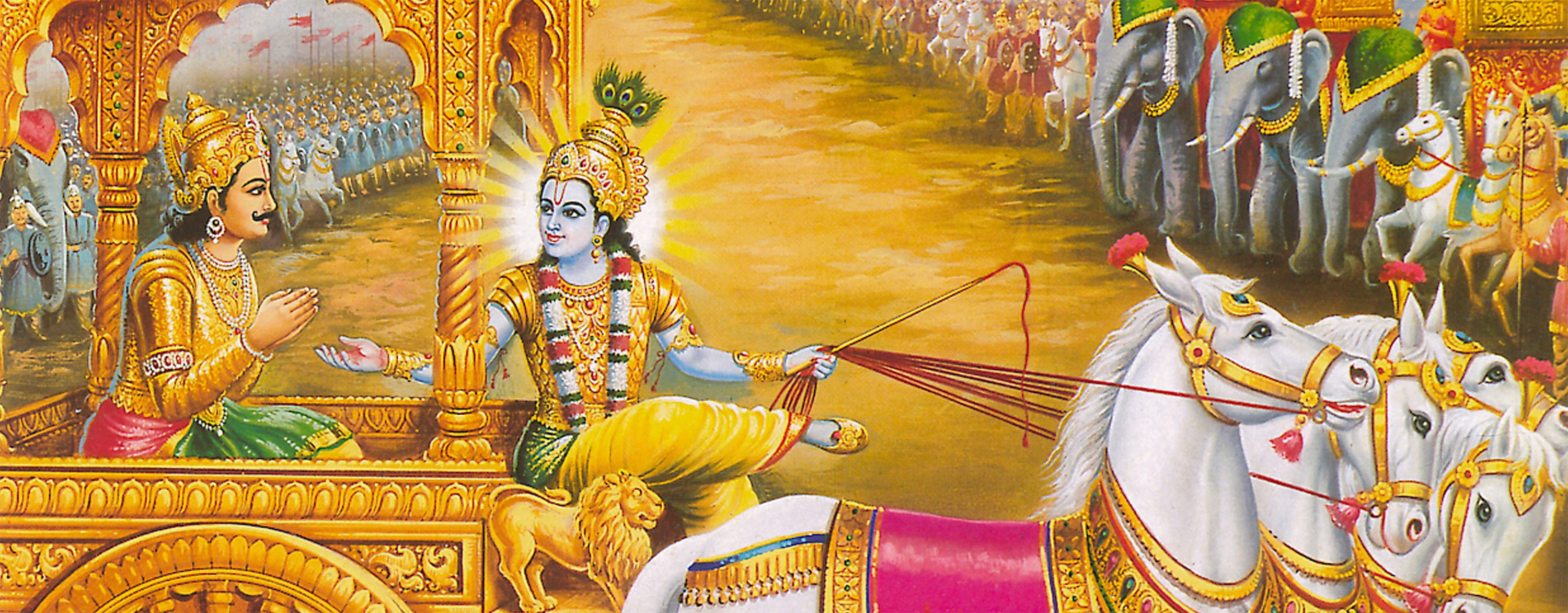
Arjuna
one of the five Pandava brothers. Krsna became his chariot driver and spoke the [Bhagavad Gita] to him.
Asutosa
Lord Siva, who is easily pleased.
Atma-nivedana
the devotional process of surrendering everything to the Lord.
Avatara
a descent, or incarnation, of the Supreme Lord.
Acarya
an ideal teacher, who teaches by his personal example; a spiritual master.
Adharma
irreligion.
Aham brahmasmi
the Vedic aphorism "I am spirit."
Akarma
"nonaction"; devotional activity for which one suffers no reaction.
Ananta
the Lord's thousand-headed serpent incarnation, who serves as the bed of Visnu and sustains the planets on His hoods.
Arca-vigraha
the form of God manifested through material elements, as in a painting or statue of Krsna worshiped in a temple or home. Present in this form, the Lord personally accepts worship from His devotees.
Asramas
the four spiritual orders according to the Vedic social system: [brahmacarya] (student life), [grhastha] (householder life), [vanaprastha] (retirement) and [sannyasa] (renunciation).
Atma
the self (the body, the mind, the intellect, the Supersoul or the individual soul).
Atmarama
one who is self – satisfied, free from eternal, material desires.
Avidya
ignorance
Abhiseka
a bathing ceremony, particularly for the coronation of a king or the installation of the Lord's Deity form.
Acarya
an ideal teacher, who teaches by his personal example; a spiritual master.
Acyuta
the Supreme Lord, who can never fall down from His position.
Adharma
irreligion.
Advaita Prabhu
an incarnation of Visnu who appeared as a principal associate of Lord Caitanya Mahaprabhu.
Aham brahmasmi
the Vedic aphorism "I am spirit."
Ajamila
a fallen [brahmana] who was saved from hell by chanting the name of Lord Narayana at the time of death
Akarma
"nonaction"; devotional activity for which one suffers no reaction.
Ananda
spiritual bliss.
Ananta
the Lord's thousand-headed serpent incarnation, who serves as the bed of Visnu and sustains the planets on His hoods.
Arati
a ceremony for greeting the Lord with chanting and offerings of food, lamps, fans, flowers and incense.
Arca-vigraha
the form of God manifested through material elements, as in a painting or statue of Krsna worshiped in a temple or home. Present in this form, the Lord personally accepts worship from His devotees.
Arjuna
one of the five Pandava brothers. Krsna became his chariot driver and spoke the [Bhagavad Gita] to him.
Asramas
the four spiritual orders according to the Vedic social system: [brahmacarya] (student life), [grhastha] (householder life), [vanaprastha] (retirement) and [sannyasa] (renunciation).
Asutosa
Lord Siva, who is easily pleased.
Atma
the self (the body, the mind, the intellect, the Supersoul or the individual soul).
Atma-nivedana
the devotional process of surrendering everything to the Lord.
Atmarama
one who is self – satisfied, free from eternal, material desires.
Avatara
a descent, or incarnation, of the Supreme Lord.
Avidya
ignorance
Abhiseka
a bathing ceremony, particularly for the coronation of a king or the installation of the Lord's Deity form.
Acyuta
the Supreme Lord, who can never fall down from His position.
Advaita Prabhu
an incarnation of Visnu who appeared as a principal associate of Lord Caitanya Mahaprabhu.
Ajamila
a fallen [brahmana] who was saved from hell by chanting the name of Lord Narayana at the time of death
Ananda
spiritual bliss.
Arati
a ceremony for greeting the Lord with chanting and offerings of food, lamps, fans, flowers and incense.
Arjuna
one of the five Pandava brothers. Krsna became his chariot driver and spoke the [Bhagavad Gita] to him.
Asutosa
Lord Siva, who is easily pleased.
Atma-nivedana
the devotional process of surrendering everything to the Lord.
Avatara
a descent, or incarnation, of the Supreme Lord.
Acarya
an ideal teacher, who teaches by his personal example; a spiritual master.
Adharma
irreligion.
Aham brahmasmi
the Vedic aphorism "I am spirit."
Akarma
"nonaction"; devotional activity for which one suffers no reaction.
Ananta
the Lord's thousand-headed serpent incarnation, who serves as the bed of Visnu and sustains the planets on His hoods.
Arca-vigraha
the form of God manifested through material elements, as in a painting or statue of Krsna worshiped in a temple or home. Present in this form, the Lord personally accepts worship from His devotees.
Asramas
the four spiritual orders according to the Vedic social system: [brahmacarya] (student life), [grhastha] (householder life), [vanaprastha] (retirement) and [sannyasa] (renunciation).
Atma
the self (the body, the mind, the intellect, the Supersoul or the individual soul).
Atmarama
one who is self – satisfied, free from eternal, material desires.
Avidya
ignorance
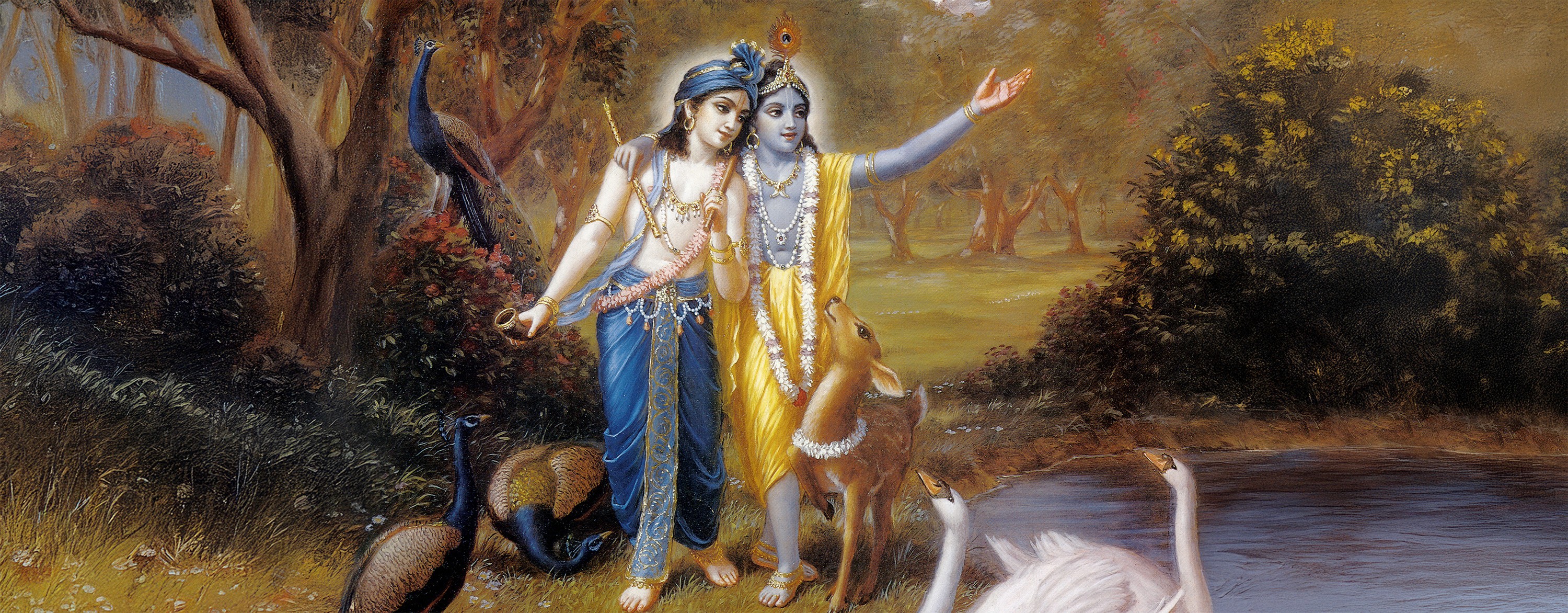
Balarama
the first plenary expansion of Lord Krsna. He appeared as the son of Rohini.
Bhagavad Gita
the discourse between the Supreme Lord, Krsna, and His devotee Arjuna expounding devotional service as both the principal means and the ultimate end of spiritual perfection.
Bhajana
any of various practices of direct worship of the Lord, especially hearing and chanting (or singing) His glories.
Bhakti-yoga
linking with the Supreme Lord through devotional service.
Brahma
the first created living being and secondary creator of the material universe.
Brahmacarya
celibate student life; the first order of Vedic spiritual life.
Brahmana
a person wise in Vedic knowledge, fied in goodness and knowledgeable of Brahman, the Absolute Truth; a member of the first Vedic social order.
Bali Maharaja
a king who became a great devotee by surrendering everything to Vamanadeva, the Lord's dwarf-[brahmana] incarnation.
Bhagavan
the Supreme Lord, who possesses all opulences in full.
Bhakta
a devotee of the Supreme Lord.
Bhukti
material enjoyment.
Brahmacari
one in the first order of spiritual life; a celibate student of a spiritual master.
Brahmajyoti
the spiritual effulgence emanating from the transcendental body of Lord Krsna and illuminating the spiritual world.
Buddha
an incarnation of the Supreme Lord who, by bewildering the atheists stopped them from misusing the [Vedas].
Balarama
the first plenary expansion of Lord Krsna. He appeared as the son of Rohini.
Bali Maharaja
a king who became a great devotee by surrendering everything to Vamanadeva, the Lord's dwarf-[brahmana] incarnation.
Bhagavad Gita
the discourse between the Supreme Lord, Krsna, and His devotee Arjuna expounding devotional service as both the principal means and the ultimate end of spiritual perfection.
Bhagavan
the Supreme Lord, who possesses all opulences in full.
Bhajana
any of various practices of direct worship of the Lord, especially hearing and chanting (or singing) His glories.
Bhakta
a devotee of the Supreme Lord.
Bhakti-yoga
linking with the Supreme Lord through devotional service.
Bhukti
material enjoyment.
Brahma
the first created living being and secondary creator of the material universe.
Brahmacari
one in the first order of spiritual life; a celibate student of a spiritual master.
Brahmacarya
celibate student life; the first order of Vedic spiritual life.
Brahmajyoti
the spiritual effulgence emanating from the transcendental body of Lord Krsna and illuminating the spiritual world.
Brahmana
a person wise in Vedic knowledge, fied in goodness and knowledgeable of Brahman, the Absolute Truth; a member of the first Vedic social order.
Buddha
an incarnation of the Supreme Lord who, by bewildering the atheists stopped them from misusing the [Vedas].
Balarama
the first plenary expansion of Lord Krsna. He appeared as the son of Rohini.
Bhagavad Gita
the discourse between the Supreme Lord, Krsna, and His devotee Arjuna expounding devotional service as both the principal means and the ultimate end of spiritual perfection.
Bhajana
any of various practices of direct worship of the Lord, especially hearing and chanting (or singing) His glories.
Bhakti-yoga
linking with the Supreme Lord through devotional service.
Brahma
the first created living being and secondary creator of the material universe.
Brahmacarya
celibate student life; the first order of Vedic spiritual life.
Brahmana
a person wise in Vedic knowledge, fied in goodness and knowledgeable of Brahman, the Absolute Truth; a member of the first Vedic social order.
Bali Maharaja
a king who became a great devotee by surrendering everything to Vamanadeva, the Lord's dwarf-[brahmana] incarnation.
Bhagavan
the Supreme Lord, who possesses all opulences in full.
Bhakta
a devotee of the Supreme Lord.
Bhukti
material enjoyment.
Brahmacari
one in the first order of spiritual life; a celibate student of a spiritual master.
Brahmajyoti
the spiritual effulgence emanating from the transcendental body of Lord Krsna and illuminating the spiritual world.
Buddha
an incarnation of the Supreme Lord who, by bewildering the atheists stopped them from misusing the [Vedas].
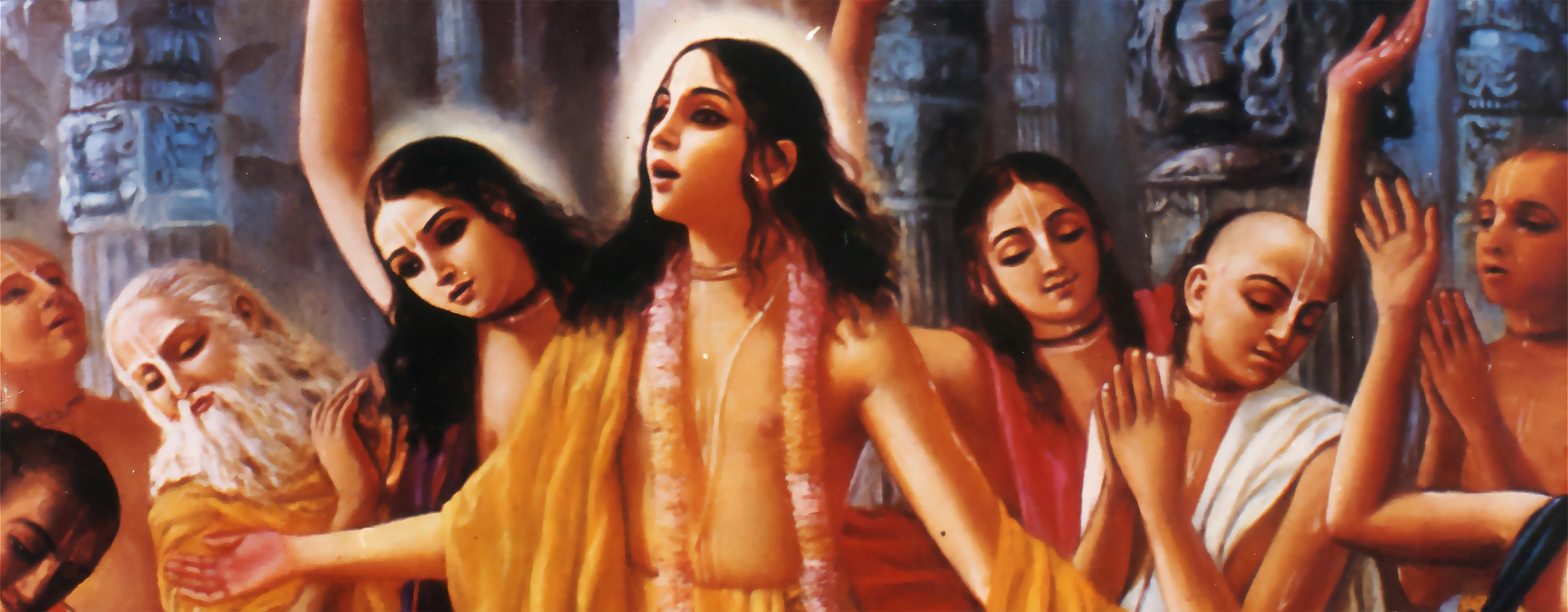
Caitanya Mahaprabhu
the Supreme Lord appearing as His own greatest devotee to teach love of God, especially through the process of congregational chanting of His holy names.
Caittya-guru
Lord Krsna personally giving guidance as a spiritual master from within the heart of an advanced devotee.
Candana
a cosmetic paste prepared from sandalwood. It is used in Deity worship.
Catur-varnyam
the four occupational divisions of society ([brahmanas, ksatriyas, vaisyas,] and [sudras]).
Caturmasya
the four months of the rainy season in India. Devotees take special vows of austerity during this time.
Cetana
a conscious living entity.
Cit-sakti
the knowledge potency of the Supreme Lord.
Caitanya-caritamrta
a biography of Sri Caitanya Mahaprabhu composed in Bengali in the late sixteenth century by Srila Krsnadas a Kaviraja.
Camara
a yak – tail fan used in Deity worship.
Catur-bhuja
four – armed.
Catur-vyuha
the Lord's plenary expansions Vasudeva, Sankarsana, Pradyumna and Aniruddha.
Causal Ocean
the ocean in which all the universes are floating.
Cintamani
a mystically potent "touchstone" described in Vedic literatures.
Cupid
the demigod who incites lusty desires in the hearts of the conditioned living entities.
Caitanya Mahaprabhu
the Supreme Lord appearing as His own greatest devotee to teach love of God, especially through the process of congregational chanting of His holy names.
Caitanya-caritamrta
a biography of Sri Caitanya Mahaprabhu composed in Bengali in the late sixteenth century by Srila Krsnadas a Kaviraja.
Caittya-guru
Lord Krsna personally giving guidance as a spiritual master from within the heart of an advanced devotee.
Camara
a yak – tail fan used in Deity worship.
Candana
a cosmetic paste prepared from sandalwood. It is used in Deity worship.
Catur-bhuja
four – armed.
Catur-varnyam
the four occupational divisions of society ([brahmanas, ksatriyas, vaisyas,] and [sudras]).
Catur-vyuha
the Lord's plenary expansions Vasudeva, Sankarsana, Pradyumna and Aniruddha.
Caturmasya
the four months of the rainy season in India. Devotees take special vows of austerity during this time.
Causal Ocean
the ocean in which all the universes are floating.
Cetana
a conscious living entity.
Cintamani
a mystically potent "touchstone" described in Vedic literatures.
Cit-sakti
the knowledge potency of the Supreme Lord.
Cupid
the demigod who incites lusty desires in the hearts of the conditioned living entities.
Caitanya Mahaprabhu
the Supreme Lord appearing as His own greatest devotee to teach love of God, especially through the process of congregational chanting of His holy names.
Caittya-guru
Lord Krsna personally giving guidance as a spiritual master from within the heart of an advanced devotee.
Candana
a cosmetic paste prepared from sandalwood. It is used in Deity worship.
Catur-varnyam
the four occupational divisions of society ([brahmanas, ksatriyas, vaisyas,] and [sudras]).
Caturmasya
the four months of the rainy season in India. Devotees take special vows of austerity during this time.
Cetana
a conscious living entity.
Cit-sakti
the knowledge potency of the Supreme Lord.
Caitanya-caritamrta
a biography of Sri Caitanya Mahaprabhu composed in Bengali in the late sixteenth century by Srila Krsnadas a Kaviraja.
Camara
a yak – tail fan used in Deity worship.
Catur-bhuja
four – armed.
Catur-vyuha
the Lord's plenary expansions Vasudeva, Sankarsana, Pradyumna and Aniruddha.
Causal Ocean
the ocean in which all the universes are floating.
Cintamani
a mystically potent "touchstone" described in Vedic literatures.
Cupid
the demigod who incites lusty desires in the hearts of the conditioned living entities.
Daivas
the demigods or godly persons.
Damodara
Lord Krsna in His pastime of being bound by mother Yasoda.
Dandavats
respectful obeisances, falling flat like a rod.
Dasya-rasa
the servitor relationship with the Lord.
Demons
impious beings who do not follow the instructions of the Lord.
Devaki
the wife of Vasudeva and mother of Lord Krsna.
Dhama
abode, place of residence. The term usually refers to the Lord's abodes.
Dhrtarastra
the uncle of the Pandavas whose attempt to usurp their kingdom for the sake of his own sons resulted in the Kuruksetra war.
Dhyana
meditation.
Dronacarya
the military teacher of the Pandavas. He was obliged to fight against them in the Battle of Kuruksetra.
Durvasa Muni
a powerful mystic [yogi,] famous for his fearful curses.
Dvapara-yuga
the third in the cycle of four ages. It lasts 864,000 years.
Daksina
a disciple's gift to his spiritual master, collected by begging and given as a token of gratitude.
Danda
a staff carried by those in the renounced order of life.
Dasaratha
the father of Lord Ramacandra.
Demigods
universal controllers and residents of the higher planets.
Deva
a demigod or godly person.
Devotional service
the process of worshiping Lord Krsna by dedicating one's thoughts, words and actions to Him with love.
Dharma
religion; duty, especially everyone's eternal service nature.
Dhruva Maharaja
a great devotee who as a child performed severe austerities to meet the Lord and get the kingdom denied him. He received an entire planet and God realization as well.
Draupadi
the wife of the five Pandavas. She was a great devotee of Lord Krsna.
Durga
the personified material energy and the wife of Lord Siva.
Dvadasi
the twelfth day after the full or new moon, thus the day after Ekadasi.
Daivas
the demigods or godly persons.
Daksina
a disciple's gift to his spiritual master, collected by begging and given as a token of gratitude.
Damodara
Lord Krsna in His pastime of being bound by mother Yasoda.
Danda
a staff carried by those in the renounced order of life.
Dandavats
respectful obeisances, falling flat like a rod.
Dasaratha
the father of Lord Ramacandra.
Dasya-rasa
the servitor relationship with the Lord.
Demigods
universal controllers and residents of the higher planets.
Demons
impious beings who do not follow the instructions of the Lord.
Deva
a demigod or godly person.
Devaki
the wife of Vasudeva and mother of Lord Krsna.
Devotional service
the process of worshiping Lord Krsna by dedicating one's thoughts, words and actions to Him with love.
Dhama
abode, place of residence. The term usually refers to the Lord's abodes.
Dharma
religion; duty, especially everyone's eternal service nature.
Dhrtarastra
the uncle of the Pandavas whose attempt to usurp their kingdom for the sake of his own sons resulted in the Kuruksetra war.
Dhruva Maharaja
a great devotee who as a child performed severe austerities to meet the Lord and get the kingdom denied him. He received an entire planet and God realization as well.
Dhyana
meditation.
Draupadi
the wife of the five Pandavas. She was a great devotee of Lord Krsna.
Dronacarya
the military teacher of the Pandavas. He was obliged to fight against them in the Battle of Kuruksetra.
Durga
the personified material energy and the wife of Lord Siva.
Durvasa Muni
a powerful mystic [yogi,] famous for his fearful curses.
Dvadasi
the twelfth day after the full or new moon, thus the day after Ekadasi.
Dvapara-yuga
the third in the cycle of four ages. It lasts 864,000 years.
Daivas
the demigods or godly persons.
Damodara
Lord Krsna in His pastime of being bound by mother Yasoda.
Dandavats
respectful obeisances, falling flat like a rod.
Dasya-rasa
the servitor relationship with the Lord.
Demons
impious beings who do not follow the instructions of the Lord.
Devaki
the wife of Vasudeva and mother of Lord Krsna.
Dhama
abode, place of residence. The term usually refers to the Lord's abodes.
Dhrtarastra
the uncle of the Pandavas whose attempt to usurp their kingdom for the sake of his own sons resulted in the Kuruksetra war.
Dhyana
meditation.
Dronacarya
the military teacher of the Pandavas. He was obliged to fight against them in the Battle of Kuruksetra.
Durvasa Muni
a powerful mystic [yogi,] famous for his fearful curses.
Dvapara-yuga
the third in the cycle of four ages. It lasts 864,000 years.
Daksina
a disciple's gift to his spiritual master, collected by begging and given as a token of gratitude.
Danda
a staff carried by those in the renounced order of life.
Dasaratha
the father of Lord Ramacandra.
Demigods
universal controllers and residents of the higher planets.
Deva
a demigod or godly person.
Devotional service
the process of worshiping Lord Krsna by dedicating one's thoughts, words and actions to Him with love.
Dharma
religion; duty, especially everyone's eternal service nature.
Dhruva Maharaja
a great devotee who as a child performed severe austerities to meet the Lord and get the kingdom denied him. He received an entire planet and God realization as well.
Draupadi
the wife of the five Pandavas. She was a great devotee of Lord Krsna.
Durga
the personified material energy and the wife of Lord Siva.
Dvadasi
the twelfth day after the full or new moon, thus the day after Ekadasi.
Ekadanda
the staff, made of a single rod, carried by a [sannyasi] of the Mayavada (impersonalist) school.
Ekadasi
a special day for increased remembrance of Krsna that comes on the eleventh day after both the full and new moon. Abstinence from grains and beans is prescribed.
Ekadanda
the staff, made of a single rod, carried by a [sannyasi] of the Mayavada (impersonalist) school.
Ekadasi
a special day for increased remembrance of Krsna that comes on the eleventh day after both the full and new moon. Abstinence from grains and beans is prescribed.
Ekadanda
the staff, made of a single rod, carried by a [sannyasi] of the Mayavada (impersonalist) school.
Ekadasi
a special day for increased remembrance of Krsna that comes on the eleventh day after both the full and new moon. Abstinence from grains and beans is prescribed.
False ego
the conception that "i am this material body."
False ego
the conception that "i am this material body."
False ego
the conception that "i am this material body."
Gadadhari
the Supreme Lord, carrier of the club.
Gandhari
the saintly, faithful wife of King Dhrtarastra and the mother of one hundred sons.
Ganesa
the demigod in charge of material opulence and freedom from misfortune. He is a son of Lord Siva and the scribe who wrote down the [Mahabharata].
Garbhodakasayi Visnu
the second Visnu expansion, who enters each universe and from whose navel grows a lotus upon which Lord Brahma appears. Brahma then creates the diverse material manifestations.
Garuda
Lord Visnu's eternal carrier, a great devotee in a birdlike form.
Gaura-purnima
the appearance day of Lord Caitanya.
Gaurakisora dasa Babaji
the disciple of Srila Bhaktivinoda Thakura who was the spiritual master of Srila Bhaktisiddhanta Sarasvati Thakura.
Giridhari
the Supreme Lord, Krsna, the lifter of Govardhana Hill.
Godhead
the ultimate source of all energies.
Gokulesvara
Lord Krsna, the master of Gokula.
Gopala
the Supreme Lord, Krsna, who protects the cows.
Gopi-jana-vallabha
the Supreme Lord, Krsna, who is dear to the [gopis].
Gosvami
a controller of the mind and senses; the title of one in the renounced, or [sannyasa,] order.
Govinda
the Supreme Lord, Krsna, who gives pleasure to the land, the senses, and the cows.
Guru
a spiritual master.
Guru-kula
a school of Vedic learning. Boys begin at age five and live as celibate students, guided by a spiritual master.
Gajendra
the king of the elephants. He was saved from a crocodile by Lord Visnu and awarded liberation.
Gandharvas
demigod singers and musicians.
Ganga
the Ganges River.
Garga Muni
the family priest for the Yadu dynasty.
Gaudiya Vaisnavas
devotees of Lord Krsna coming in disciplic succession from Lord Caitanya Mahaprabhu.
Gauracandra
the "golden moon," Lord Caitanya Mahaprabhu.
Gayatri mantra
the Vedic prayer chanted silently by [brahmanas] at sunrise, noon and sunset.
Go-dasa
a servant of the senses.
Gokula
Vrndavana
Goloka Vrndavana (Krsnaloka)
the highest spiritual planet, Lord Krsna's personal abode.
Gopala Bhatta Gosvami
one of the six Vaisnava spiritual masters who directly followed Lord Caitanya Mahaprabhu and systematically presented His teachings.
Gopis
Krsna's cowherd girl friends, who are His most surrendered and confidential devotees.
Govardhana
a large hill dear to Lord Krsna and His devotees. Krsna held it up for seven days to protect His devotees in Vrndavan from a devastating storm sent by Indra.
Grhastha
regulated householder life; the second order of Vedic spiritual life; one in that order.
Guru-daksina
a disciple's gift to his spiritual master, collected by begging and given as a token of gratitude.
Guru-puja
worship of the spiritual master.
Gadadhari
the Supreme Lord, carrier of the club.
Gajendra
the king of the elephants. He was saved from a crocodile by Lord Visnu and awarded liberation.
Gandhari
the saintly, faithful wife of King Dhrtarastra and the mother of one hundred sons.
Gandharvas
demigod singers and musicians.
Ganesa
the demigod in charge of material opulence and freedom from misfortune. He is a son of Lord Siva and the scribe who wrote down the [Mahabharata].
Ganga
the Ganges River.
Garbhodakasayi Visnu
the second Visnu expansion, who enters each universe and from whose navel grows a lotus upon which Lord Brahma appears. Brahma then creates the diverse material manifestations.
Garga Muni
the family priest for the Yadu dynasty.
Garuda
Lord Visnu's eternal carrier, a great devotee in a birdlike form.
Gaudiya Vaisnavas
devotees of Lord Krsna coming in disciplic succession from Lord Caitanya Mahaprabhu.
Gaura-purnima
the appearance day of Lord Caitanya.
Gauracandra
the "golden moon," Lord Caitanya Mahaprabhu.
Gaurakisora dasa Babaji
the disciple of Srila Bhaktivinoda Thakura who was the spiritual master of Srila Bhaktisiddhanta Sarasvati Thakura.
Gayatri mantra
the Vedic prayer chanted silently by [brahmanas] at sunrise, noon and sunset.
Giridhari
the Supreme Lord, Krsna, the lifter of Govardhana Hill.
Go-dasa
a servant of the senses.
Godhead
the ultimate source of all energies.
Gokula
Vrndavana
Gokulesvara
Lord Krsna, the master of Gokula.
Goloka Vrndavana (Krsnaloka)
the highest spiritual planet, Lord Krsna's personal abode.
Gopala
the Supreme Lord, Krsna, who protects the cows.
Gopala Bhatta Gosvami
one of the six Vaisnava spiritual masters who directly followed Lord Caitanya Mahaprabhu and systematically presented His teachings.
Gopi-jana-vallabha
the Supreme Lord, Krsna, who is dear to the [gopis].
Gopis
Krsna's cowherd girl friends, who are His most surrendered and confidential devotees.
Gosvami
a controller of the mind and senses; the title of one in the renounced, or [sannyasa,] order.
Govardhana
a large hill dear to Lord Krsna and His devotees. Krsna held it up for seven days to protect His devotees in Vrndavan from a devastating storm sent by Indra.
Govinda
the Supreme Lord, Krsna, who gives pleasure to the land, the senses, and the cows.
Grhastha
regulated householder life; the second order of Vedic spiritual life; one in that order.
Guru
a spiritual master.
Guru-daksina
a disciple's gift to his spiritual master, collected by begging and given as a token of gratitude.
Guru-kula
a school of Vedic learning. Boys begin at age five and live as celibate students, guided by a spiritual master.
Guru-puja
worship of the spiritual master.
Gadadhari
the Supreme Lord, carrier of the club.
Gandhari
the saintly, faithful wife of King Dhrtarastra and the mother of one hundred sons.
Ganesa
the demigod in charge of material opulence and freedom from misfortune. He is a son of Lord Siva and the scribe who wrote down the [Mahabharata].
Garbhodakasayi Visnu
the second Visnu expansion, who enters each universe and from whose navel grows a lotus upon which Lord Brahma appears. Brahma then creates the diverse material manifestations.
Garuda
Lord Visnu's eternal carrier, a great devotee in a birdlike form.
Gaura-purnima
the appearance day of Lord Caitanya.
Gaurakisora dasa Babaji
the disciple of Srila Bhaktivinoda Thakura who was the spiritual master of Srila Bhaktisiddhanta Sarasvati Thakura.
Giridhari
the Supreme Lord, Krsna, the lifter of Govardhana Hill.
Godhead
the ultimate source of all energies.
Gokulesvara
Lord Krsna, the master of Gokula.
Gopala
the Supreme Lord, Krsna, who protects the cows.
Gopi-jana-vallabha
the Supreme Lord, Krsna, who is dear to the [gopis].
Gosvami
a controller of the mind and senses; the title of one in the renounced, or [sannyasa,] order.
Govinda
the Supreme Lord, Krsna, who gives pleasure to the land, the senses, and the cows.
Guru
a spiritual master.
Guru-kula
a school of Vedic learning. Boys begin at age five and live as celibate students, guided by a spiritual master.
Gajendra
the king of the elephants. He was saved from a crocodile by Lord Visnu and awarded liberation.
Gandharvas
demigod singers and musicians.
Ganga
the Ganges River.
Garga Muni
the family priest for the Yadu dynasty.
Gaudiya Vaisnavas
devotees of Lord Krsna coming in disciplic succession from Lord Caitanya Mahaprabhu.
Gauracandra
the "golden moon," Lord Caitanya Mahaprabhu.
Gayatri mantra
the Vedic prayer chanted silently by [brahmanas] at sunrise, noon and sunset.
Go-dasa
a servant of the senses.
Gokula
Vrndavana
Goloka Vrndavana (Krsnaloka)
the highest spiritual planet, Lord Krsna's personal abode.
Gopala Bhatta Gosvami
one of the six Vaisnava spiritual masters who directly followed Lord Caitanya Mahaprabhu and systematically presented His teachings.
Gopis
Krsna's cowherd girl friends, who are His most surrendered and confidential devotees.
Govardhana
a large hill dear to Lord Krsna and His devotees. Krsna held it up for seven days to protect His devotees in Vrndavan from a devastating storm sent by Indra.
Grhastha
regulated householder life; the second order of Vedic spiritual life; one in that order.
Guru-daksina
a disciple's gift to his spiritual master, collected by begging and given as a token of gratitude.
Guru-puja
worship of the spiritual master.
Haladhara
the Supreme Lord, who, in the form of Balarama, bears a plow in His hands.
Hara
Siva
Hari
the Supreme Lord, who removes all obstacles to spiritual progress.
Hari-nama-sankirtana
congregational chanting of the holy names of the Supreme Lord.
Haridasa Thakura
a great devotee and associate of Lord Caitanya Mahaprabhu who chanted three hundred thousand names of God a day.
Hayagriva, Lord
the Supreme Lord's horse-headed incarnation, who returned the stolen [Vedas] to Brahma.
Hell
hellish planets within this universe meant for the punishment and rectification of the sinful.
Hiranyaksa
the demoniac son of Kasyapa who was killed by Lord Varaha.
Hanuman
the great monkey servitor of Lord Ramacandra.
Hare Krsna mantra
the great chant for deliverance: Hare Krsna, Hare Krsna, Krsna Krsna, Hare Hare, Hare Rama, Hare Rama, Rama Rama, Hare Hare.
Hari-bhakti-vilasa
Sanatana Gosvami's book on the rules and regulations of Vaisnava life.
Hari-vamsa
the appendix to the [Mahabharata.] It is a summary of Krsna's pastimes by Srila Vyasadeva.
Hastinapura
the ancient capital of Bharata-varsa, or India. It occupies a portion of what is today called New Delhi.
Heavenly planets
the higher planets of the universe, residences of the demigods.
Hiranyakasipu
a powerful demon who tormented his son Prahlada, a great devotee, and was slain by Lord Nrsimhadeva.
Hrsikesa
the Supreme Lord, the supreme master of everyone's senses.
Haladhara
the Supreme Lord, who, in the form of Balarama, bears a plow in His hands.
Hanuman
the great monkey servitor of Lord Ramacandra.
Hara
Siva
Hare Krsna mantra
the great chant for deliverance: Hare Krsna, Hare Krsna, Krsna Krsna, Hare Hare, Hare Rama, Hare Rama, Rama Rama, Hare Hare.
Hari
the Supreme Lord, who removes all obstacles to spiritual progress.
Hari-bhakti-vilasa
Sanatana Gosvami's book on the rules and regulations of Vaisnava life.
Hari-nama-sankirtana
congregational chanting of the holy names of the Supreme Lord.
Hari-vamsa
the appendix to the [Mahabharata.] It is a summary of Krsna's pastimes by Srila Vyasadeva.
Haridasa Thakura
a great devotee and associate of Lord Caitanya Mahaprabhu who chanted three hundred thousand names of God a day.
Hastinapura
the ancient capital of Bharata-varsa, or India. It occupies a portion of what is today called New Delhi.
Hayagriva, Lord
the Supreme Lord's horse-headed incarnation, who returned the stolen [Vedas] to Brahma.
Heavenly planets
the higher planets of the universe, residences of the demigods.
Hell
hellish planets within this universe meant for the punishment and rectification of the sinful.
Hiranyakasipu
a powerful demon who tormented his son Prahlada, a great devotee, and was slain by Lord Nrsimhadeva.
Hiranyaksa
the demoniac son of Kasyapa who was killed by Lord Varaha.
Hrsikesa
the Supreme Lord, the supreme master of everyone's senses.
Haladhara
the Supreme Lord, who, in the form of Balarama, bears a plow in His hands.
Hara
Siva
Hari
the Supreme Lord, who removes all obstacles to spiritual progress.
Hari-nama-sankirtana
congregational chanting of the holy names of the Supreme Lord.
Haridasa Thakura
a great devotee and associate of Lord Caitanya Mahaprabhu who chanted three hundred thousand names of God a day.
Hayagriva, Lord
the Supreme Lord's horse-headed incarnation, who returned the stolen [Vedas] to Brahma.
Hell
hellish planets within this universe meant for the punishment and rectification of the sinful.
Hiranyaksa
the demoniac son of Kasyapa who was killed by Lord Varaha.
Hanuman
the great monkey servitor of Lord Ramacandra.
Hare Krsna mantra
the great chant for deliverance: Hare Krsna, Hare Krsna, Krsna Krsna, Hare Hare, Hare Rama, Hare Rama, Rama Rama, Hare Hare.
Hari-bhakti-vilasa
Sanatana Gosvami's book on the rules and regulations of Vaisnava life.
Hari-vamsa
the appendix to the [Mahabharata.] It is a summary of Krsna's pastimes by Srila Vyasadeva.
Hastinapura
the ancient capital of Bharata-varsa, or India. It occupies a portion of what is today called New Delhi.
Heavenly planets
the higher planets of the universe, residences of the demigods.
Hiranyakasipu
a powerful demon who tormented his son Prahlada, a great devotee, and was slain by Lord Nrsimhadeva.
Hrsikesa
the Supreme Lord, the supreme master of everyone's senses.
Iksvaku
the son of Manu who was king of the earth in ancient times and to whom Manu spoke [Bhagavad Gita].
Indraloka
the planet of Indra.
Isopanisad
one of the principal [Upanisads.]
Indra
the chief of the administrative demigods, king of the heavenly planets and presiding deity of rain.
Isa
the Supreme Lord, who is the supreme controller.
Isvara
the Supreme Lord, who is the supreme controller.
Iksvaku
the son of Manu who was king of the earth in ancient times and to whom Manu spoke [Bhagavad Gita].
Indra
the chief of the administrative demigods, king of the heavenly planets and presiding deity of rain.
Indraloka
the planet of Indra.
Isa
the Supreme Lord, who is the supreme controller.
Isopanisad
one of the principal [Upanisads.]
Isvara
the Supreme Lord, who is the supreme controller.
Iksvaku
the son of Manu who was king of the earth in ancient times and to whom Manu spoke [Bhagavad Gita].
Indraloka
the planet of Indra.
Isopanisad
one of the principal [Upanisads.]
Indra
the chief of the administrative demigods, king of the heavenly planets and presiding deity of rain.
Isa
the Supreme Lord, who is the supreme controller.
Isvara
the Supreme Lord, who is the supreme controller.
Jada Bharata
Bharata Maharaja in his final birth as the renounced [brahmana] who gave wonderful spiritual instruction to Maharaja Rahugana.
Jagai and Madhai
two great debauchees whom Lord Nityananda converted into Vaisnavas.
Jambavati
the daughter of Jambavan. She is one of the eight principal queens of Lord Krsna.
Janaloka
a heavenly planet.
Janmastami
the celebration of Lord Krsna's appearance in the material world.
Jaya
an exclamation meaning "all victory to you!" or "all glories to you!"
Jayadeva Gosvami
a great Vaisnava poet who wrote [Gita-govinda].
Jiva Gosvami
one of the six Vaisnava spiritual masters who directly followed Lord Caitanya Mahaprabhu and systematically presented His teachings.
Jnana
transcendental knowledge.
Jagad-isa
the Supreme Lord, who is the proprietor of all the universes.
Jagannatha
the Supreme Lord, who is Lord of the universe; the particular Deity form of that Lord at Puri, Orissa.
Janaka Maharaja
the father of Sita devi, consort of Lord Ramacandra.
Janardana
the Supreme Lord, the original abode of all living beings.
Japa
the soft recitation of the Lord's holy names as a private meditation.
Jaya and Vijaya
two doorkeepers of Vaikuntha who were cursed for offending the four Kumara Rsis but who attained liberation after three births as demons.
Jiva (jivatma)
the living entity, who is an eternal individual soul, part and parcel of the Supreme Lord.
Jiva-tattva
the living entities, atomic parts of the Supreme Lord.
Jnana-yoga
the path of spiritual realization through a speculative philosophical search for truth.
Jada Bharata
Bharata Maharaja in his final birth as the renounced [brahmana] who gave wonderful spiritual instruction to Maharaja Rahugana.
Jagad-isa
the Supreme Lord, who is the proprietor of all the universes.
Jagai and Madhai
two great debauchees whom Lord Nityananda converted into Vaisnavas.
Jagannatha
the Supreme Lord, who is Lord of the universe; the particular Deity form of that Lord at Puri, Orissa.
Jambavati
the daughter of Jambavan. She is one of the eight principal queens of Lord Krsna.
Janaka Maharaja
the father of Sita devi, consort of Lord Ramacandra.
Janaloka
a heavenly planet.
Janardana
the Supreme Lord, the original abode of all living beings.
Janmastami
the celebration of Lord Krsna's appearance in the material world.
Japa
the soft recitation of the Lord's holy names as a private meditation.
Jaya
an exclamation meaning "all victory to you!" or "all glories to you!"
Jaya and Vijaya
two doorkeepers of Vaikuntha who were cursed for offending the four Kumara Rsis but who attained liberation after three births as demons.
Jayadeva Gosvami
a great Vaisnava poet who wrote [Gita-govinda].
Jiva (jivatma)
the living entity, who is an eternal individual soul, part and parcel of the Supreme Lord.
Jiva Gosvami
one of the six Vaisnava spiritual masters who directly followed Lord Caitanya Mahaprabhu and systematically presented His teachings.
Jiva-tattva
the living entities, atomic parts of the Supreme Lord.
Jnana
transcendental knowledge.
Jnana-yoga
the path of spiritual realization through a speculative philosophical search for truth.
Jada Bharata
Bharata Maharaja in his final birth as the renounced [brahmana] who gave wonderful spiritual instruction to Maharaja Rahugana.
Jagai and Madhai
two great debauchees whom Lord Nityananda converted into Vaisnavas.
Jambavati
the daughter of Jambavan. She is one of the eight principal queens of Lord Krsna.
Janaloka
a heavenly planet.
Janmastami
the celebration of Lord Krsna's appearance in the material world.
Jaya
an exclamation meaning "all victory to you!" or "all glories to you!"
Jayadeva Gosvami
a great Vaisnava poet who wrote [Gita-govinda].
Jiva Gosvami
one of the six Vaisnava spiritual masters who directly followed Lord Caitanya Mahaprabhu and systematically presented His teachings.
Jnana
transcendental knowledge.
Jagad-isa
the Supreme Lord, who is the proprietor of all the universes.
Jagannatha
the Supreme Lord, who is Lord of the universe; the particular Deity form of that Lord at Puri, Orissa.
Janaka Maharaja
the father of Sita devi, consort of Lord Ramacandra.
Janardana
the Supreme Lord, the original abode of all living beings.
Japa
the soft recitation of the Lord's holy names as a private meditation.
Jaya and Vijaya
two doorkeepers of Vaikuntha who were cursed for offending the four Kumara Rsis but who attained liberation after three births as demons.
Jiva (jivatma)
the living entity, who is an eternal individual soul, part and parcel of the Supreme Lord.
Jiva-tattva
the living entities, atomic parts of the Supreme Lord.
Jnana-yoga
the path of spiritual realization through a speculative philosophical search for truth.
Kaivalya
the impersonal liberation of merging into the spiritual effulgence emanating from the Lord.
Kali-yuga
(Age of Kali) the present age, characterized by quarrel. It is last in the cycle of four ages and began five thousand years ago.
Kalpa
Brahma's daytime, 4,320,000,000 years.
Kamadhenu
spiritual cows in the spiritual world who yield unlimited quantities of milk.
Kamsa
a demoniac king of the Bhoja dynasty and maternal uncle of Krsna.
Karma
material, fruitive activity and its reactions; also, fruitive actions performed in accordance with Vedic injunctions.
Karma-yoga
the path of God realization through dedicating the fruits of one's work to God..
Kasyapa
a great saint who was the father of many demigods and also of the Supreme Lord's Vamanadeva incarnation.
Katyayani
the material energy personified. She is also known as Durga and Kali and by many other names.
Kesava
the Supreme Lord, Krsna, who has fine, black hair.
Kirtana
the devotional process of chanting the names and glories of the Supreme Lord.
Krsna
the original, two-armed form of the Supreme Personality of Godhead.
Krsna-kirtana
the chanting of Krsna's name and pastimes.
Krsna-prasadam
Prasadam
Krsnaloka
Goloka Vrndavana
Ksirodakasayi Visnu
the expansion of the Supreme Lord who enters the heart of every living being as the Supersoul.
Kunti
an aunt of Lord Krsna and the mother of the Pandavas.
Kuruksetra
a place of pilgrimage held sacred since ancient times and the site of a great war fought five thousand years ago; located near New Delhi, India.
Kali
age of Kali yuga.
Kaliya
the many headed serpent chastised by Lord Krsna for poisoning a section of the Yamuna River.
Kama
lust.
Kamandalu
a waterpot carried by [sannyasis].
Karanodakasayi Visnu
Maha-Visnu, the expansion of the Supreme Lord from whom all material universes emanate.
Karma-kanda
the part of the [Vedas] that prescribes modes of action for obtaining material benedictions.
Karmendriyas
the working senses.
Katha Upanisad
one of the 108 Vedic scriptures known as the [upanisads.]
Kauravas
the descendants of Kuru who fought against the Pandavas in the Battle of Kuruksetra.
Kesi
a demon who attacked the inhabitants of Vrndavana in the form of a wild horse. He was killed by Lord Krsna.
Krodha
anger.
Krsna-katha
discussions by or about the Supreme Lord, Krsna.
Krsna-lila
the transcendental pastimes of Lord Krsna.
Krsnadasa Kaviraja
the great Vaisnava spiritual master who recorded the biography and teachings of Lord Caitanya Mahaprabhu in his [Caitanya caritamrta].
Ksatriya
a warrior or administrator; the second Vedic social order.
Kumaras
four learned ascetic sons of Lord Brahma appearing eternally as children.
Kuru
the founder of the dynasty in which the Pandavas, as well as their archrivals, the sons of Dhrtarastra, took birth.
Kuvera
the treasurer of the demigods and father of Nalakuvara and Manigriva.
Kaivalya
the impersonal liberation of merging into the spiritual effulgence emanating from the Lord.
Kali
age of Kali yuga.
Kali-yuga
(Age of Kali) the present age, characterized by quarrel. It is last in the cycle of four ages and began five thousand years ago.
Kaliya
the many headed serpent chastised by Lord Krsna for poisoning a section of the Yamuna River.
Kalpa
Brahma's daytime, 4,320,000,000 years.
Kama
lust.
Kamadhenu
spiritual cows in the spiritual world who yield unlimited quantities of milk.
Kamandalu
a waterpot carried by [sannyasis].
Kamsa
a demoniac king of the Bhoja dynasty and maternal uncle of Krsna.
Karanodakasayi Visnu
Maha-Visnu, the expansion of the Supreme Lord from whom all material universes emanate.
Karma
material, fruitive activity and its reactions; also, fruitive actions performed in accordance with Vedic injunctions.
Karma-kanda
the part of the [Vedas] that prescribes modes of action for obtaining material benedictions.
Karma-yoga
the path of God realization through dedicating the fruits of one's work to God..
Karmendriyas
the working senses.
Kasyapa
a great saint who was the father of many demigods and also of the Supreme Lord's Vamanadeva incarnation.
Katha Upanisad
one of the 108 Vedic scriptures known as the [upanisads.]
Katyayani
the material energy personified. She is also known as Durga and Kali and by many other names.
Kauravas
the descendants of Kuru who fought against the Pandavas in the Battle of Kuruksetra.
Kesava
the Supreme Lord, Krsna, who has fine, black hair.
Kesi
a demon who attacked the inhabitants of Vrndavana in the form of a wild horse. He was killed by Lord Krsna.
Kirtana
the devotional process of chanting the names and glories of the Supreme Lord.
Krodha
anger.
Krsna
the original, two-armed form of the Supreme Personality of Godhead.
Krsna-katha
discussions by or about the Supreme Lord, Krsna.
Krsna-kirtana
the chanting of Krsna's name and pastimes.
Krsna-lila
the transcendental pastimes of Lord Krsna.
Krsna-prasadam
Prasadam
Krsnadasa Kaviraja
the great Vaisnava spiritual master who recorded the biography and teachings of Lord Caitanya Mahaprabhu in his [Caitanya caritamrta].
Krsnaloka
Goloka Vrndavana
Ksatriya
a warrior or administrator; the second Vedic social order.
Ksirodakasayi Visnu
the expansion of the Supreme Lord who enters the heart of every living being as the Supersoul.
Kumaras
four learned ascetic sons of Lord Brahma appearing eternally as children.
Kunti
an aunt of Lord Krsna and the mother of the Pandavas.
Kuru
the founder of the dynasty in which the Pandavas, as well as their archrivals, the sons of Dhrtarastra, took birth.
Kuruksetra
a place of pilgrimage held sacred since ancient times and the site of a great war fought five thousand years ago; located near New Delhi, India.
Kuvera
the treasurer of the demigods and father of Nalakuvara and Manigriva.
Kaivalya
the impersonal liberation of merging into the spiritual effulgence emanating from the Lord.
Kali-yuga
(Age of Kali) the present age, characterized by quarrel. It is last in the cycle of four ages and began five thousand years ago.
Kalpa
Brahma's daytime, 4,320,000,000 years.
Kamadhenu
spiritual cows in the spiritual world who yield unlimited quantities of milk.
Kamsa
a demoniac king of the Bhoja dynasty and maternal uncle of Krsna.
Karma
material, fruitive activity and its reactions; also, fruitive actions performed in accordance with Vedic injunctions.
Karma-yoga
the path of God realization through dedicating the fruits of one's work to God..
Kasyapa
a great saint who was the father of many demigods and also of the Supreme Lord's Vamanadeva incarnation.
Katyayani
the material energy personified. She is also known as Durga and Kali and by many other names.
Kesava
the Supreme Lord, Krsna, who has fine, black hair.
Kirtana
the devotional process of chanting the names and glories of the Supreme Lord.
Krsna
the original, two-armed form of the Supreme Personality of Godhead.
Krsna-kirtana
the chanting of Krsna's name and pastimes.
Krsna-prasadam
Prasadam
Krsnaloka
Goloka Vrndavana
Ksirodakasayi Visnu
the expansion of the Supreme Lord who enters the heart of every living being as the Supersoul.
Kunti
an aunt of Lord Krsna and the mother of the Pandavas.
Kuruksetra
a place of pilgrimage held sacred since ancient times and the site of a great war fought five thousand years ago; located near New Delhi, India.
Kali
age of Kali yuga.
Kaliya
the many headed serpent chastised by Lord Krsna for poisoning a section of the Yamuna River.
Kama
lust.
Kamandalu
a waterpot carried by [sannyasis].
Karanodakasayi Visnu
Maha-Visnu, the expansion of the Supreme Lord from whom all material universes emanate.
Karma-kanda
the part of the [Vedas] that prescribes modes of action for obtaining material benedictions.
Karmendriyas
the working senses.
Katha Upanisad
one of the 108 Vedic scriptures known as the [upanisads.]
Kauravas
the descendants of Kuru who fought against the Pandavas in the Battle of Kuruksetra.
Kesi
a demon who attacked the inhabitants of Vrndavana in the form of a wild horse. He was killed by Lord Krsna.
Krodha
anger.
Krsna-katha
discussions by or about the Supreme Lord, Krsna.
Krsna-lila
the transcendental pastimes of Lord Krsna.
Krsnadasa Kaviraja
the great Vaisnava spiritual master who recorded the biography and teachings of Lord Caitanya Mahaprabhu in his [Caitanya caritamrta].
Ksatriya
a warrior or administrator; the second Vedic social order.
Kumaras
four learned ascetic sons of Lord Brahma appearing eternally as children.
Kuru
the founder of the dynasty in which the Pandavas, as well as their archrivals, the sons of Dhrtarastra, took birth.
Kuvera
the treasurer of the demigods and father of Nalakuvara and Manigriva.
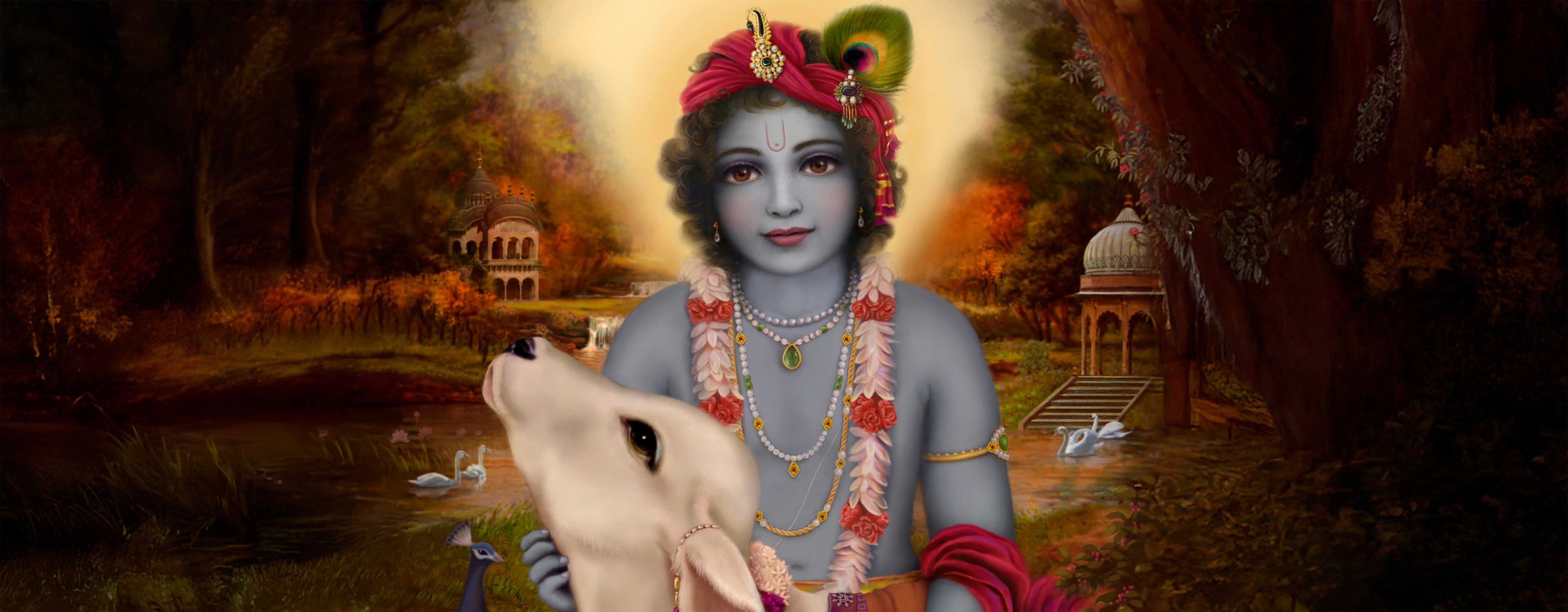
Laksmi
the goddess of fortune and eternal consort of Lord Narayana.
Lila-avataras
innumerable incarnations of the Supreme Lord who descend to the material world to display spiritual pastimes.
Locana dasa Thakura
a great Krsna conscious spiritual master.
Liberation
freedom from the material concept of life; being situated in one's constitutional position as an eternal servant of God.
Lobha
greed.
Loka
a planet.
Laksmi
the goddess of fortune and eternal consort of Lord Narayana.
Liberation
freedom from the material concept of life; being situated in one's constitutional position as an eternal servant of God.
Lila-avataras
innumerable incarnations of the Supreme Lord who descend to the material world to display spiritual pastimes.
Lobha
greed.
Locana dasa Thakura
a great Krsna conscious spiritual master.
Loka
a planet.
Laksmi
the goddess of fortune and eternal consort of Lord Narayana.
Lila-avataras
innumerable incarnations of the Supreme Lord who descend to the material world to display spiritual pastimes.
Locana dasa Thakura
a great Krsna conscious spiritual master.
Liberation
freedom from the material concept of life; being situated in one's constitutional position as an eternal servant of God.
Lobha
greed.
Loka
a planet.
Madana
Cupid, the demigod who incites lust in living beings.
Madhurya-lila
Lord Krsna's pastimes of conjugal love with His eternal associates.
Madhusudana
the Supreme Lord, Krsna, killer of the demon Madhu.
Magadha
a province of ancient India.
Maha-mantra
the great chant for deliverance: Hare Krsna, Hare Krsna, Krsna Krsna, Hare Hare/ Hare Rama, Hare Rama, Rama Rama, Hare Hare.
Maha-purusa
the Supreme Lord, who is the supreme enjoyer.
Mahabharata
Vyasadeva's epic history of greater India, which includes the events of the Kuruksetra war and the narration of [Bhagavad Gita].
Mahajanas
great self realized souls, authorities on the science of Krsna consciousness.
Maharaja
a title for a great king or sage.
Mangala-arati
the daily predawn worship ceremony knowing the Deity of the Supreme Lord.
Manu
a demigod son of Brahma who is the forefather and lawgiver of the human race. There is a succession of fourteen Manus during each day of Brahma.
Maya
the inferior, illusory energy of the Supreme Lord, which rules over this material creation; also, forgetfulness of one's relationship with Krsna.
Mayavadi
an impersonalist philosopher who conceives of the Absolute as ultimately formless and the living entity as equal to God.
Muni
a sage.
Madana-mohana
the Supreme Lord, Krsna, who enchants even Cupid.
Madhurya-rasa
the spiritual relationship in which the Supreme Lord and His devotee reciprocate as lovers.
Madhvacarya
a great thirteenth century Vaisnava spiritual master who preached the theistic philosophy of pure dualism.
Maha-bhava
the highest stage of love of God.
Maha-prasadam
the remnants of food directly offered to the Deity of Lord Krsna.
Maha-Visnu
the expansion of the Supreme Lord from whom all material universes emanate.
Mahadeva
Siva
Mahamaya
the illusory, material energy of the Supreme Lord.
Mahatma
a "great soul," an exalted devotee of Lord Krsna.
Manigriva
a son of Kuvera cursed by Narada Muni to take birth as an [arjuna] tree. He was ultimately liberated by Lord Krsna.
Mathura
Lord Krsna's abode, surrounding Vrndavana, where He took birth and to which He later returned after performing His childhood pastimes in Vrndavana.
Mayavada
the impersonal philosophy propounding the unqualified oneness of God and the living entities and the nonreality of manifest nature.
Mukti
liberation from material bondage.
Murari
Krsna, the enemy of the demon Mura.
Madana
Cupid, the demigod who incites lust in living beings.
Madana-mohana
the Supreme Lord, Krsna, who enchants even Cupid.
Madhurya-lila
Lord Krsna's pastimes of conjugal love with His eternal associates.
Madhurya-rasa
the spiritual relationship in which the Supreme Lord and His devotee reciprocate as lovers.
Madhusudana
the Supreme Lord, Krsna, killer of the demon Madhu.
Madhvacarya
a great thirteenth century Vaisnava spiritual master who preached the theistic philosophy of pure dualism.
Magadha
a province of ancient India.
Maha-bhava
the highest stage of love of God.
Maha-mantra
the great chant for deliverance: Hare Krsna, Hare Krsna, Krsna Krsna, Hare Hare/ Hare Rama, Hare Rama, Rama Rama, Hare Hare.
Maha-prasadam
the remnants of food directly offered to the Deity of Lord Krsna.
Maha-purusa
the Supreme Lord, who is the supreme enjoyer.
Maha-Visnu
the expansion of the Supreme Lord from whom all material universes emanate.
Mahabharata
Vyasadeva's epic history of greater India, which includes the events of the Kuruksetra war and the narration of [Bhagavad Gita].
Mahadeva
Siva
Mahajanas
great self realized souls, authorities on the science of Krsna consciousness.
Mahamaya
the illusory, material energy of the Supreme Lord.
Maharaja
a title for a great king or sage.
Mahatma
a "great soul," an exalted devotee of Lord Krsna.
Mangala-arati
the daily predawn worship ceremony knowing the Deity of the Supreme Lord.
Manigriva
a son of Kuvera cursed by Narada Muni to take birth as an [arjuna] tree. He was ultimately liberated by Lord Krsna.
Manu
a demigod son of Brahma who is the forefather and lawgiver of the human race. There is a succession of fourteen Manus during each day of Brahma.
Mathura
Lord Krsna's abode, surrounding Vrndavana, where He took birth and to which He later returned after performing His childhood pastimes in Vrndavana.
Maya
the inferior, illusory energy of the Supreme Lord, which rules over this material creation; also, forgetfulness of one's relationship with Krsna.
Mayavada
the impersonal philosophy propounding the unqualified oneness of God and the living entities and the nonreality of manifest nature.
Mayavadi
an impersonalist philosopher who conceives of the Absolute as ultimately formless and the living entity as equal to God.
Mukti
liberation from material bondage.
Muni
a sage.
Murari
Krsna, the enemy of the demon Mura.
Madana
Cupid, the demigod who incites lust in living beings.
Madhurya-lila
Lord Krsna's pastimes of conjugal love with His eternal associates.
Madhusudana
the Supreme Lord, Krsna, killer of the demon Madhu.
Magadha
a province of ancient India.
Maha-mantra
the great chant for deliverance: Hare Krsna, Hare Krsna, Krsna Krsna, Hare Hare/ Hare Rama, Hare Rama, Rama Rama, Hare Hare.
Maha-purusa
the Supreme Lord, who is the supreme enjoyer.
Mahabharata
Vyasadeva's epic history of greater India, which includes the events of the Kuruksetra war and the narration of [Bhagavad Gita].
Mahajanas
great self realized souls, authorities on the science of Krsna consciousness.
Maharaja
a title for a great king or sage.
Mangala-arati
the daily predawn worship ceremony knowing the Deity of the Supreme Lord.
Manu
a demigod son of Brahma who is the forefather and lawgiver of the human race. There is a succession of fourteen Manus during each day of Brahma.
Maya
the inferior, illusory energy of the Supreme Lord, which rules over this material creation; also, forgetfulness of one's relationship with Krsna.
Mayavadi
an impersonalist philosopher who conceives of the Absolute as ultimately formless and the living entity as equal to God.
Muni
a sage.
Madana-mohana
the Supreme Lord, Krsna, who enchants even Cupid.
Madhurya-rasa
the spiritual relationship in which the Supreme Lord and His devotee reciprocate as lovers.
Madhvacarya
a great thirteenth century Vaisnava spiritual master who preached the theistic philosophy of pure dualism.
Maha-bhava
the highest stage of love of God.
Maha-prasadam
the remnants of food directly offered to the Deity of Lord Krsna.
Maha-Visnu
the expansion of the Supreme Lord from whom all material universes emanate.
Mahadeva
Siva
Mahamaya
the illusory, material energy of the Supreme Lord.
Mahatma
a "great soul," an exalted devotee of Lord Krsna.
Manigriva
a son of Kuvera cursed by Narada Muni to take birth as an [arjuna] tree. He was ultimately liberated by Lord Krsna.
Mathura
Lord Krsna's abode, surrounding Vrndavana, where He took birth and to which He later returned after performing His childhood pastimes in Vrndavana.
Mayavada
the impersonal philosophy propounding the unqualified oneness of God and the living entities and the nonreality of manifest nature.
Mukti
liberation from material bondage.
Murari
Krsna, the enemy of the demon Mura.
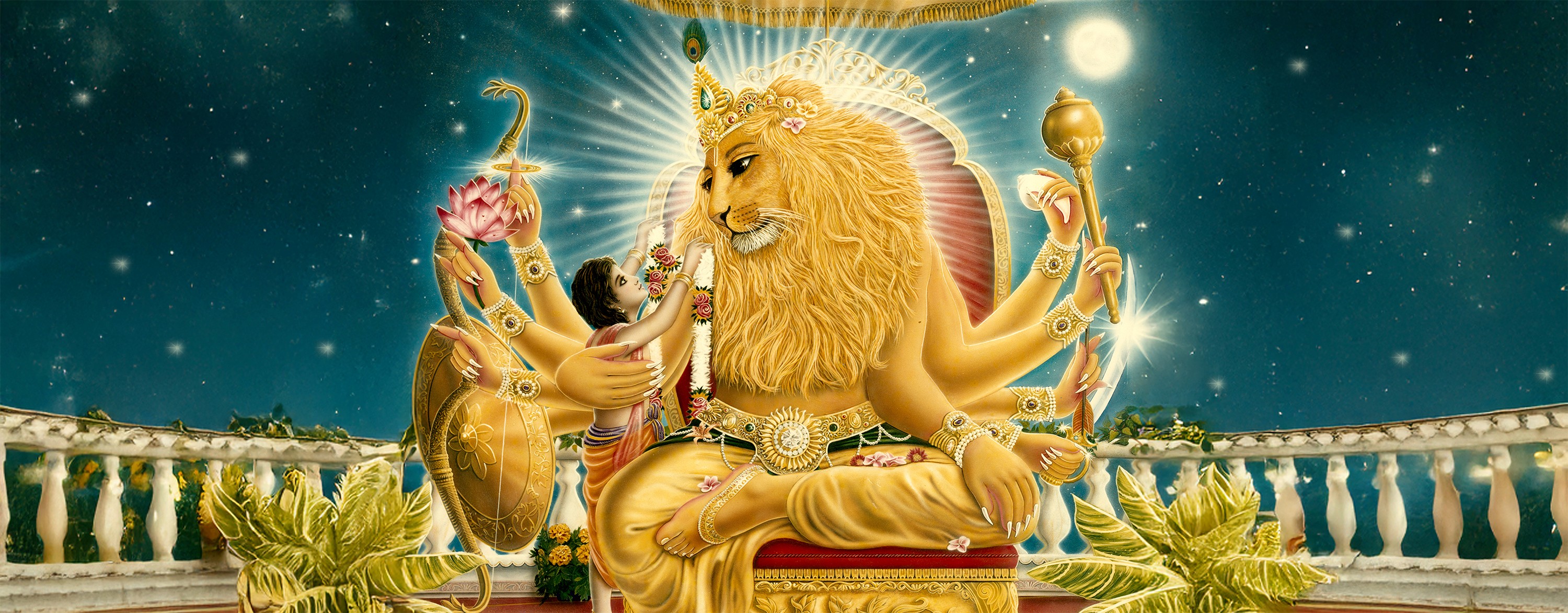
Naimisaranya
the sacred forest where [Srimad-Bhagavatam] was spoken by Suta Gosvami to a great assembly of sages.
Naksatras
the stars along the path of the moon.
Nama-aparadha
an offense against the holy name of the Lord.
Nanda Maharaja
the king of Vraja and foster father of Lord Krsna.
Narada Muni
a pure devotee of the Lord who travels throughout the universes in his eternal body, glorifying devotional service. he is the spiritual master of Vyasadeva and of many other great devotees.
Naradhama
the lowest of mankind.
Navadvipa
the place where Lord Caitanya appeared in this world.
Nirguna
without qualities. In reference to the Supreme Lord, the term signifies that He is beyond material qualities.
Niskama
free from material desires.
Nitya-baddha
the conditioned soul, bound in the material world since time immemorial.
Nityananda Prabhu
the incarnation of Lord Balarama who appeared as the principal associate of Lord Caitanya Mahaprabhu.
Naisthika-brahmacari
one who has been celibate since birth.
Nalakuvara
a son of Kuvera cursed by Narada Muni to take birth as an [arjuna] tree. He was ultimately liberated by Lord Krsna.
Namaskara
"bowing down," a respectful greeting or address.
Nanda-nandana
the Supreme Lord, Krsna, who is the darling son of Nanda Maharaja.
Narada-pancaratra
Narada Muni's book on the processes of Deity worship and [mantra] meditation.
Narayana, Lord
the Supreme Lord in His majestic, four armed form. An expansion of Krsna, He presides over the Vaikuntha planets.
Nimi
a devotee king, ruler of Videha
Nirvana
freedom from material existence.
Niskincana
having nothing; a renunciant.
Nitya-mukta
an eternally liberated soul.
Nrsimhadeva
the half-man, half-lion incarnation of the Supreme Lord, who protected Prahlada and killed the demon Hiranyakasipu.
Naimisaranya
the sacred forest where [Srimad-Bhagavatam] was spoken by Suta Gosvami to a great assembly of sages.
Naisthika-brahmacari
one who has been celibate since birth.
Naksatras
the stars along the path of the moon.
Nalakuvara
a son of Kuvera cursed by Narada Muni to take birth as an [arjuna] tree. He was ultimately liberated by Lord Krsna.
Nama-aparadha
an offense against the holy name of the Lord.
Namaskara
"bowing down," a respectful greeting or address.
Nanda Maharaja
the king of Vraja and foster father of Lord Krsna.
Nanda-nandana
the Supreme Lord, Krsna, who is the darling son of Nanda Maharaja.
Narada Muni
a pure devotee of the Lord who travels throughout the universes in his eternal body, glorifying devotional service. he is the spiritual master of Vyasadeva and of many other great devotees.
Narada-pancaratra
Narada Muni's book on the processes of Deity worship and [mantra] meditation.
Naradhama
the lowest of mankind.
Narayana, Lord
the Supreme Lord in His majestic, four armed form. An expansion of Krsna, He presides over the Vaikuntha planets.
Navadvipa
the place where Lord Caitanya appeared in this world.
Nimi
a devotee king, ruler of Videha
Nirguna
without qualities. In reference to the Supreme Lord, the term signifies that He is beyond material qualities.
Nirvana
freedom from material existence.
Niskama
free from material desires.
Niskincana
having nothing; a renunciant.
Nitya-baddha
the conditioned soul, bound in the material world since time immemorial.
Nitya-mukta
an eternally liberated soul.
Nityananda Prabhu
the incarnation of Lord Balarama who appeared as the principal associate of Lord Caitanya Mahaprabhu.
Nrsimhadeva
the half-man, half-lion incarnation of the Supreme Lord, who protected Prahlada and killed the demon Hiranyakasipu.
Naimisaranya
the sacred forest where [Srimad-Bhagavatam] was spoken by Suta Gosvami to a great assembly of sages.
Naksatras
the stars along the path of the moon.
Nama-aparadha
an offense against the holy name of the Lord.
Nanda Maharaja
the king of Vraja and foster father of Lord Krsna.
Narada Muni
a pure devotee of the Lord who travels throughout the universes in his eternal body, glorifying devotional service. he is the spiritual master of Vyasadeva and of many other great devotees.
Naradhama
the lowest of mankind.
Navadvipa
the place where Lord Caitanya appeared in this world.
Nirguna
without qualities. In reference to the Supreme Lord, the term signifies that He is beyond material qualities.
Niskama
free from material desires.
Nitya-baddha
the conditioned soul, bound in the material world since time immemorial.
Nityananda Prabhu
the incarnation of Lord Balarama who appeared as the principal associate of Lord Caitanya Mahaprabhu.
Naisthika-brahmacari
one who has been celibate since birth.
Nalakuvara
a son of Kuvera cursed by Narada Muni to take birth as an [arjuna] tree. He was ultimately liberated by Lord Krsna.
Namaskara
"bowing down," a respectful greeting or address.
Nanda-nandana
the Supreme Lord, Krsna, who is the darling son of Nanda Maharaja.
Narada-pancaratra
Narada Muni's book on the processes of Deity worship and [mantra] meditation.
Narayana, Lord
the Supreme Lord in His majestic, four armed form. An expansion of Krsna, He presides over the Vaikuntha planets.
Nimi
a devotee king, ruler of Videha
Nirvana
freedom from material existence.
Niskincana
having nothing; a renunciant.
Nitya-mukta
an eternally liberated soul.
Nrsimhadeva
the half-man, half-lion incarnation of the Supreme Lord, who protected Prahlada and killed the demon Hiranyakasipu.
Om (Omkara)
the sacred syllable that begins many Vedic [mantras] and that represents the Supreme Lord.
Om (Omkara)
the sacred syllable that begins many Vedic [mantras] and that represents the Supreme Lord.
Om (Omkara)
the sacred syllable that begins many Vedic [mantras] and that represents the Supreme Lord.
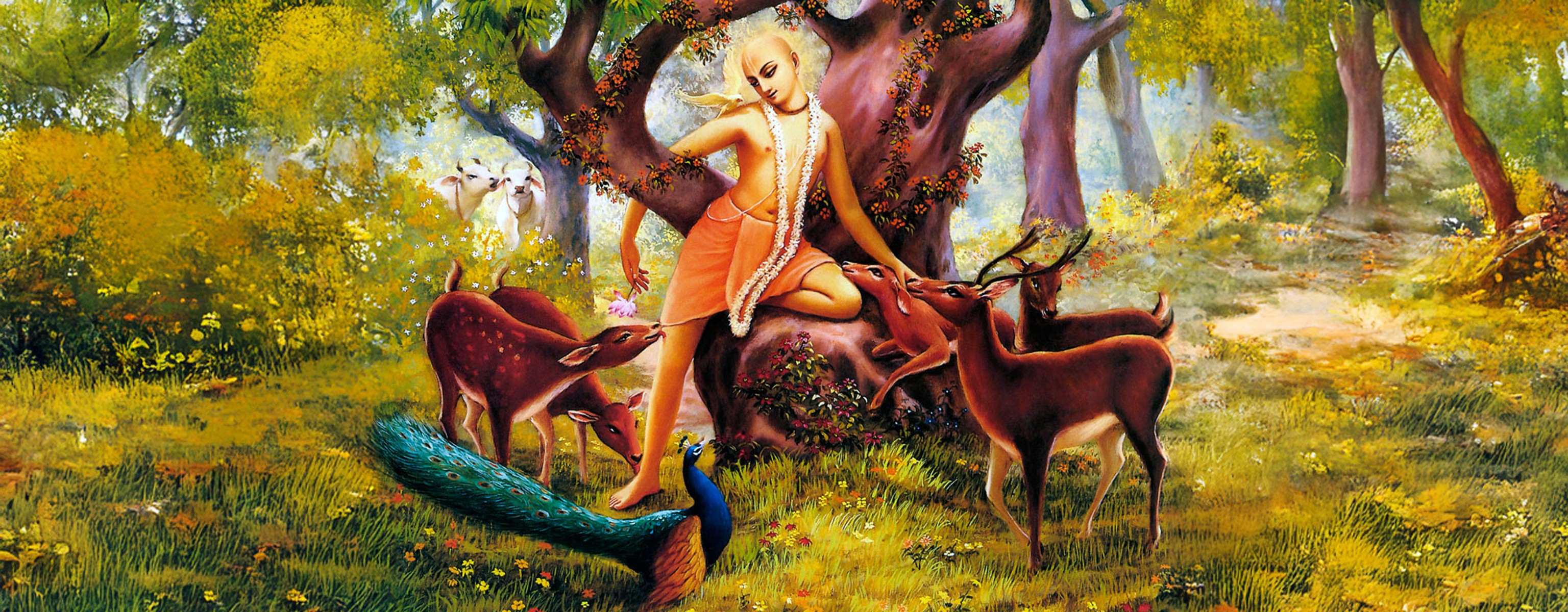
Padma
the lotus flower held by Lord Visnu.
Panca-gavya
five products from the cow, used in bathing a worshipable person. They are milk, yogurt, ghee, cow urine and cow dung.
Pandavas
Yudhisthira, Bhima, Arjuna, Nakula and Sahadeva, the five warrior-brothers who were intimate friends and devotees of Lord Krsna.
Pandu
the brother of Dhrtarastra and father of the five Pandavas.
Paramatma
the Supersoul, a Visnu expansion of the Supreme Lord residing in the heart of each embodied living entity and pervading all of material nature.
Parampara
a disciplic succession.
Parijata flower
a wonderful flower found in the heavenly planets.
Parivrajakacarya
the third stage of [sannyasa,] wherein the devotee constantly travels and preaches.
Prahlada Maharaja
a devotee persecuted by his demoniac father Hiranyakasipu but protected and saved by the Lord in the form of Nrsimhadeva.
Pranayama
breath control used in [yoga] practice, especially [astanga yoga].
Purusottama
Lord Krsna, who is the Supreme Person.
Padma Purana
one of the eighteen [Puranas,] or Vedic historical scriptures.
Panca-mahayajna
the five daily sacrifices householders perform to become free from sins committed unintentionally.
Pandita
a scholar.
Paramahamsa
a topmost, swanlike devotee of the Supreme Lord; the highest stage of [sannyasa].
Paramesvara
the supreme controller, Lord Krsna.
Parasara
the great sage who narrated the [Visnu Purana] and was the father of Srila Vyasadeva.
Pariksit Maharaja
the emperor of the world who heard [Srimad-Bhagavatam] from Sukadeva Gosvami and thus attained perfection.
Parvati
Sati, Lord Siva's consort, reborn as the daughter of the king of the Himalaya Mountains.
Prakrti
the energy of the Supreme; the female principle enjoyed by the male [purusa].
Prema
pure love of God, the highest stage in the progressive development of devotional service.
Putana
a witch who was sent by Kamsa to appear in the form of a beautiful woman to kill baby Krsna, but who was instead killed by Him and granted liberation.
Padma
the lotus flower held by Lord Visnu.
Padma Purana
one of the eighteen [Puranas,] or Vedic historical scriptures.
Panca-gavya
five products from the cow, used in bathing a worshipable person. They are milk, yogurt, ghee, cow urine and cow dung.
Panca-mahayajna
the five daily sacrifices householders perform to become free from sins committed unintentionally.
Pandavas
Yudhisthira, Bhima, Arjuna, Nakula and Sahadeva, the five warrior-brothers who were intimate friends and devotees of Lord Krsna.
Pandita
a scholar.
Pandu
the brother of Dhrtarastra and father of the five Pandavas.
Paramahamsa
a topmost, swanlike devotee of the Supreme Lord; the highest stage of [sannyasa].
Paramatma
the Supersoul, a Visnu expansion of the Supreme Lord residing in the heart of each embodied living entity and pervading all of material nature.
Paramesvara
the supreme controller, Lord Krsna.
Parampara
a disciplic succession.
Parasara
the great sage who narrated the [Visnu Purana] and was the father of Srila Vyasadeva.
Parijata flower
a wonderful flower found in the heavenly planets.
Pariksit Maharaja
the emperor of the world who heard [Srimad-Bhagavatam] from Sukadeva Gosvami and thus attained perfection.
Parivrajakacarya
the third stage of [sannyasa,] wherein the devotee constantly travels and preaches.
Parvati
Sati, Lord Siva's consort, reborn as the daughter of the king of the Himalaya Mountains.
Prahlada Maharaja
a devotee persecuted by his demoniac father Hiranyakasipu but protected and saved by the Lord in the form of Nrsimhadeva.
Prakrti
the energy of the Supreme; the female principle enjoyed by the male [purusa].
Pranayama
breath control used in [yoga] practice, especially [astanga yoga].
Prema
pure love of God, the highest stage in the progressive development of devotional service.
Purusottama
Lord Krsna, who is the Supreme Person.
Putana
a witch who was sent by Kamsa to appear in the form of a beautiful woman to kill baby Krsna, but who was instead killed by Him and granted liberation.
Padma
the lotus flower held by Lord Visnu.
Panca-gavya
five products from the cow, used in bathing a worshipable person. They are milk, yogurt, ghee, cow urine and cow dung.
Pandavas
Yudhisthira, Bhima, Arjuna, Nakula and Sahadeva, the five warrior-brothers who were intimate friends and devotees of Lord Krsna.
Pandu
the brother of Dhrtarastra and father of the five Pandavas.
Paramatma
the Supersoul, a Visnu expansion of the Supreme Lord residing in the heart of each embodied living entity and pervading all of material nature.
Parampara
a disciplic succession.
Parijata flower
a wonderful flower found in the heavenly planets.
Parivrajakacarya
the third stage of [sannyasa,] wherein the devotee constantly travels and preaches.
Prahlada Maharaja
a devotee persecuted by his demoniac father Hiranyakasipu but protected and saved by the Lord in the form of Nrsimhadeva.
Pranayama
breath control used in [yoga] practice, especially [astanga yoga].
Purusottama
Lord Krsna, who is the Supreme Person.
Padma Purana
one of the eighteen [Puranas,] or Vedic historical scriptures.
Panca-mahayajna
the five daily sacrifices householders perform to become free from sins committed unintentionally.
Pandita
a scholar.
Paramahamsa
a topmost, swanlike devotee of the Supreme Lord; the highest stage of [sannyasa].
Paramesvara
the supreme controller, Lord Krsna.
Parasara
the great sage who narrated the [Visnu Purana] and was the father of Srila Vyasadeva.
Pariksit Maharaja
the emperor of the world who heard [Srimad-Bhagavatam] from Sukadeva Gosvami and thus attained perfection.
Parvati
Sati, Lord Siva's consort, reborn as the daughter of the king of the Himalaya Mountains.
Prakrti
the energy of the Supreme; the female principle enjoyed by the male [purusa].
Prema
pure love of God, the highest stage in the progressive development of devotional service.
Putana
a witch who was sent by Kamsa to appear in the form of a beautiful woman to kill baby Krsna, but who was instead killed by Him and granted liberation.
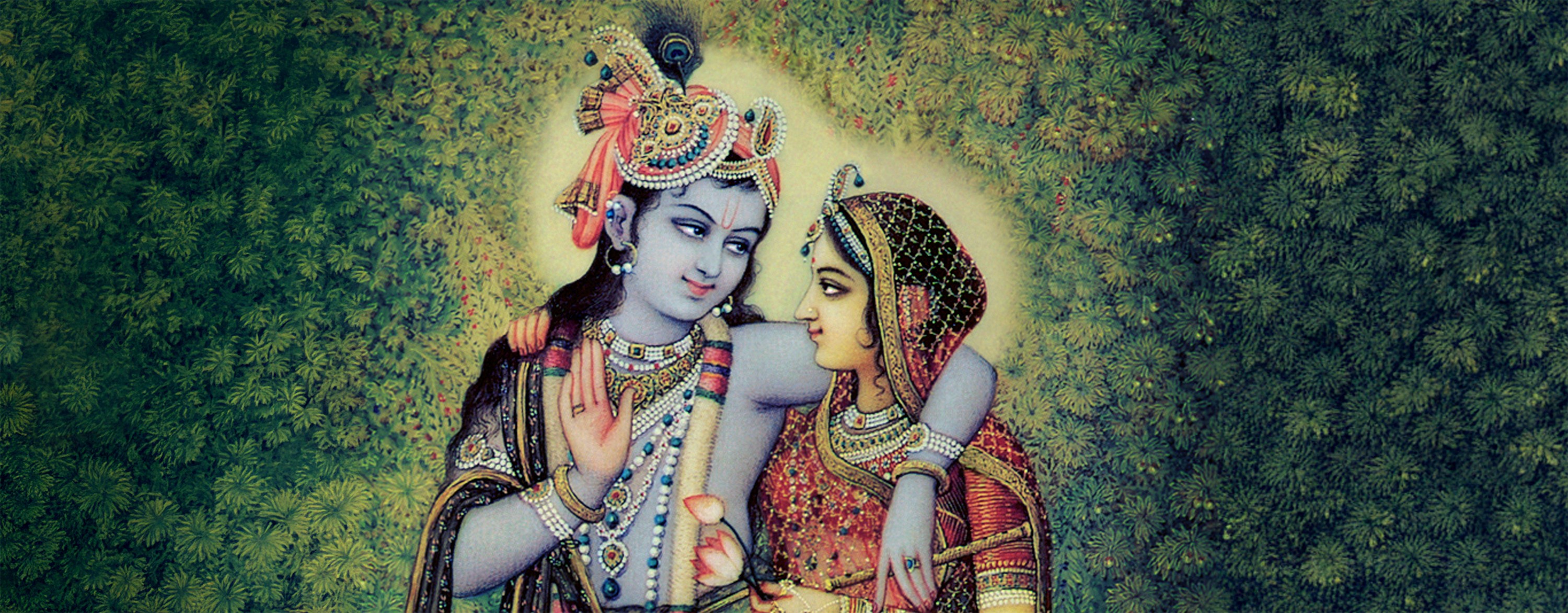
Radharani
Lord Krsna's most intimate consort, who is the personification of His internal, spiritual potency.
Raghunatha dasa Gosvami
one of the six Vaisnava spiritual masters who directly followed Lord Caitanya Mahaprabhu and systematically presented His teachings.
Rajo-guna
the material mode of passion.
Rama-rajya
a perfect Vedic kingdom like that of Lord Ramacandra, the incarnation of the Supreme Lord appearing as the perfect king.
Ramanujacarya
a great eleventh century spiritual master of the Sri Vaisnava [sampradaya].
Rasa Dance
Lord Krsna's pleasure dance with the cowherd maidens of Vrndavana. It is a pure exchange of spiritual love between the Lord and His most advanced, confidential servitors.
Rasas
the loving moods or mellows relished in the exchange of love with the Supreme Lord.
Ravana
a demoniac ruler who was killed by Lord Ramacandra.
Rohini
one of Vasudeva's wives, who later lived under the care of Nanda Maharaja. She is the mother of Balarama.
Rudra
Siva
Rukmini
Lord Krsna's principal queen in Dvaraka.
Raghunatha Bhatta Gosvami
one of the six Vaisnava spiritual masters who directly followed Lord Caitanya Mahaprabhu and systematically presented His teachings.
Rajasuya-yajna
the great sacrificial ceremony performed by King Yudhisthira and attended by Lord Krsna.
Rama
(1) a name of Lord Krsna meaning "the source of all pleasure." (2) Lord Ramacandra, an incarnation of the Supreme Lord as the perfect king.
Ramananda Raya
an intimate associate of Lord Caitanya Mahaprabhu.
Ramayana
the epic history about Lord Ramacandra, originally written by Valmiki Muni.
Rasa-lila
the pure exchange of spiritual love between Krsna and His most advanced, confidential servitors, the cowherd damsels of Vrajabhumi.
Ratha-yatra
an annual festival in which Deities of the Supreme Lord are drawn in procession upon huge, gaily decorated, canopied chariots.
Rg Veda
one of the four [Vedas,] the original scriptures spoken by the Lord Himself.
Rsi
a sage.
Rukmi
a brother of Krsna's queen Rukmini.
Rupa Gosvami
the chief of the six Vaisnava spiritual masters who directly followed Lord Caitanya Mahaprabhu and systematically presented His teachings.
Radharani
Lord Krsna's most intimate consort, who is the personification of His internal, spiritual potency.
Raghunatha Bhatta Gosvami
one of the six Vaisnava spiritual masters who directly followed Lord Caitanya Mahaprabhu and systematically presented His teachings.
Raghunatha dasa Gosvami
one of the six Vaisnava spiritual masters who directly followed Lord Caitanya Mahaprabhu and systematically presented His teachings.
Rajasuya-yajna
the great sacrificial ceremony performed by King Yudhisthira and attended by Lord Krsna.
Rajo-guna
the material mode of passion.
Rama
(1) a name of Lord Krsna meaning "the source of all pleasure." (2) Lord Ramacandra, an incarnation of the Supreme Lord as the perfect king.
Rama-rajya
a perfect Vedic kingdom like that of Lord Ramacandra, the incarnation of the Supreme Lord appearing as the perfect king.
Ramananda Raya
an intimate associate of Lord Caitanya Mahaprabhu.
Ramanujacarya
a great eleventh century spiritual master of the Sri Vaisnava [sampradaya].
Ramayana
the epic history about Lord Ramacandra, originally written by Valmiki Muni.
Rasa Dance
Lord Krsna's pleasure dance with the cowherd maidens of Vrndavana. It is a pure exchange of spiritual love between the Lord and His most advanced, confidential servitors.
Rasa-lila
the pure exchange of spiritual love between Krsna and His most advanced, confidential servitors, the cowherd damsels of Vrajabhumi.
Rasas
the loving moods or mellows relished in the exchange of love with the Supreme Lord.
Ratha-yatra
an annual festival in which Deities of the Supreme Lord are drawn in procession upon huge, gaily decorated, canopied chariots.
Ravana
a demoniac ruler who was killed by Lord Ramacandra.
Rg Veda
one of the four [Vedas,] the original scriptures spoken by the Lord Himself.
Rohini
one of Vasudeva's wives, who later lived under the care of Nanda Maharaja. She is the mother of Balarama.
Rsi
a sage.
Rudra
Siva
Rukmi
a brother of Krsna's queen Rukmini.
Rukmini
Lord Krsna's principal queen in Dvaraka.
Rupa Gosvami
the chief of the six Vaisnava spiritual masters who directly followed Lord Caitanya Mahaprabhu and systematically presented His teachings.
Radharani
Lord Krsna's most intimate consort, who is the personification of His internal, spiritual potency.
Raghunatha dasa Gosvami
one of the six Vaisnava spiritual masters who directly followed Lord Caitanya Mahaprabhu and systematically presented His teachings.
Rajo-guna
the material mode of passion.
Rama-rajya
a perfect Vedic kingdom like that of Lord Ramacandra, the incarnation of the Supreme Lord appearing as the perfect king.
Ramanujacarya
a great eleventh century spiritual master of the Sri Vaisnava [sampradaya].
Rasa Dance
Lord Krsna's pleasure dance with the cowherd maidens of Vrndavana. It is a pure exchange of spiritual love between the Lord and His most advanced, confidential servitors.
Rasas
the loving moods or mellows relished in the exchange of love with the Supreme Lord.
Ravana
a demoniac ruler who was killed by Lord Ramacandra.
Rohini
one of Vasudeva's wives, who later lived under the care of Nanda Maharaja. She is the mother of Balarama.
Rudra
Siva
Rukmini
Lord Krsna's principal queen in Dvaraka.
Raghunatha Bhatta Gosvami
one of the six Vaisnava spiritual masters who directly followed Lord Caitanya Mahaprabhu and systematically presented His teachings.
Rajasuya-yajna
the great sacrificial ceremony performed by King Yudhisthira and attended by Lord Krsna.
Rama
(1) a name of Lord Krsna meaning "the source of all pleasure." (2) Lord Ramacandra, an incarnation of the Supreme Lord as the perfect king.
Ramananda Raya
an intimate associate of Lord Caitanya Mahaprabhu.
Ramayana
the epic history about Lord Ramacandra, originally written by Valmiki Muni.
Rasa-lila
the pure exchange of spiritual love between Krsna and His most advanced, confidential servitors, the cowherd damsels of Vrajabhumi.
Ratha-yatra
an annual festival in which Deities of the Supreme Lord are drawn in procession upon huge, gaily decorated, canopied chariots.
Rg Veda
one of the four [Vedas,] the original scriptures spoken by the Lord Himself.
Rsi
a sage.
Rukmi
a brother of Krsna's queen Rukmini.
Rupa Gosvami
the chief of the six Vaisnava spiritual masters who directly followed Lord Caitanya Mahaprabhu and systematically presented His teachings.
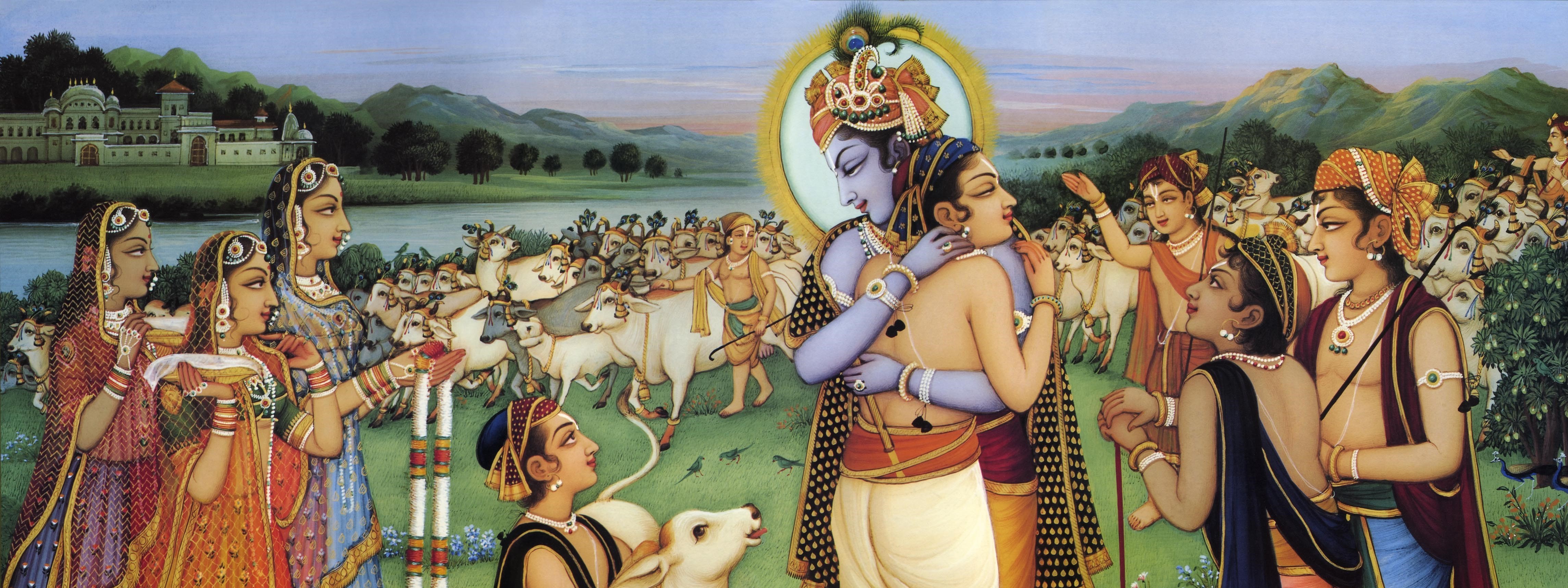
Sac-cid-ananda
eternal, blissful and full of knowledge.
Sadhana
the beginning phase of devotional service, consisting of regulated practice.
Sadhu-sanga
the association of saintly persons.
Sakama-bhakta
a devotee with material desires.
Sakhya-rasa
a relationship with the Supreme Lord in devotional friendship.
Sama Veda
one of the four original [Vedas]. It consists of sacrificial hymns set to music.
Sampradaya
a disciplic succession of spiritual masters; the followers in that tradition.
Samskara
one of the purificatory Vedic rituals performed one by one from the time of conception until death.
Sanatana Gosvami
one of the six Vaisnava spiritual masters who directly followed Lord Caitanya Mahaprabhu and systematically presented His teachings.
Sankara
Siva
Sankarsana
one of the four original expansions of Lord Krsna in the spiritual world; also, another name of Balarama, given by Garga Muni.
Sankhya-yoga
the process of linking with the Supreme by intellectually tracing out the source of creation.
Sannyasa
renounced life; the fourth order of Vedic spiritual life.
Santa-rasa
a relationship with the Supreme Lord in neutrality.
Sarupya
(the liberation of) attaining a spiritual form like that of the Supreme Lord.
Sarva-karana-karana
the cause of all causes, Krsna.
Sastra
revealed scripture, such as the Vedic literature.
Sattva-guna
the material mode of goodness.
Satya-yuga
the first and best in the cycle of the four ages of the universe. It lasts 1,728,000 years.
Sayujya
(the liberation of) merging into the spiritual effulgence of the Lord.
Seva
devotional service.
Sevya
one who is served.
Siddhaloka
the heavenly planet whose inhabitants possess all mystic powers.
Siksastaka
eight verses by Lord Caitanya Mahaprabhu glorifying the chanting of the Lord's holy name.
Sita
the eternal consort of Lord Ramacandra.
Siva
the special incarnation of the Lord as the demigod in charge of the mode of ignorance and the destruction of the material manifestation.
Smarana
the devotional process of remembering the Supreme Lord.
Soul
the eternal living entity who is the marginal energy, eternally part and parcel of the Supreme Lord.
Sravana
the devotional process of hearing about the Supreme Lord.
Sri Gurudeva
the spiritual master.
Srila
a title indicating possession of exceptional spiritual qualities.
Srimad-Bhagavatam
the [Purana,] or history, written by Srila Vyasadeva specifically give a deep understanding of Lord Krsna, His devotees and devotional service.
Srivasa
an intimate associate of Lord Caitanya Mahaprabhu.
Sruti
knowledge via hearing; also, the original Vedic scriptures (the [Vedas] and [upanisads]), given directly by the Supreme Lord.
Sudarsana cakra
the disc weapon of the Supreme Lord.
Sukadeva Gosvami
the great devotee sage who spoke [Srimad-Bhagavatam] to King Pariksit just prior to the King's death.
Suniti
the mother of Dhruva Maharaja.
Suruci
the stepmother of Dhruva Maharaja.
Svayambhuva Manu
the Manu who appears first in Brahma's day and who was the grandfather of Dhruva Maharaja.
Sac-cid-ananda-vigraha
the Lord's transcendental form, which is eternal and full of knowledge and bliss.
Sadhu
a saintly person.
Saguna
having qualities. In reference to the Supreme Lord, the term signifies that He has spiritual qualities.
Sakatasura
a ghost who took shelter of a bullock cart with the intention of killing Lord Krsna but who instead was killed by the Lord.
Salagrama-sila
a Deity incarnation of the Supreme Lord in the form of a stone.
Samadhi
trance; complete absorption in God consciousness.
Samsara
the cycle of repeated birth and death in the material world.
Sanatana
eternal.
Sanatana-dharma
the eternal occupation, or religion, of all living beings; devotional service to the Supreme Lord.
Sankaracarya
the incarnation of Lord Siva as the great philosopher who, on the order of the Supreme Lord, preached impersonalism based on the [Vedas].
Sankha
the conchshell held by Lord Visnu.
Sankirtana
congregational glorification of the Supreme Lord, Krsna, especially through chanting of the His holy names.
Santa
peaceful.
Sarasvati
the goddess of learning and the wife of Lord Brahma.
Sarva-jna
one who knows everything past, present and future.
Sarvabhauma Bhattacarya
a famous logician who surrendered to Lord Sri Caitanya Mahaprabhu.
Sat
eternal.
Sattvika
in the mode of goodness.
Satyabhama
one of the principal queens of Lord Krsna during His pastimes in the city of Dvaraka.
Sesa Naga
an expansion of Lord Balarama who takes the form of a many hooded serpent and serves as Lord Visnu's couch and other paraphernalia. He also holds the millions of universes on His hoods.
Sevaka
a servant.
Siddha
a perfected person, or mystic; a demigod from Siddhaloka.
Siddhi
mystic power or perfection acquired through [yoga] practice.
Sisupala
a king who was an enemy of Krsna.
Sita-Rama
the transcendental couple manifested as Lord Ramacandra, Krsna's incarnation as the perfect king, and Rama's consort, Sita.
Skanda Purana
one of the eighteen [Puranas,] or Vedic historical scriptures.
Smarta
a [brahmana] interested more in the external performance of the rules and rituals of the [Vedas] than in attaining Lord Krsna, the goal of the [Vedas].
Sraddha
the ceremony of offering food and other items to one's ancestors to free them from suffering.
Sravanam kirtanam visnoh
the devotional process of hearing and chanting about Lord Visnu, or Krsna.
Sridhara Svami
the author of the earliest extant Vaisnava commentaries on [Bhagavad Gita] and [Srimad-Bhagavatam].
Srila Prabhupada
His Divine Grace A. C. Bhaktivedanta Swami Prabhupada.
Srinivasacarya
a chief follower of the six Gosvamis of Vrndavana.
Srivatsa
the sign of the goddess of fortune on the chest of Lord Visnu, or Narayana.
Sudama Vipra
a poor householder friend and devotee of Lord Krsna who was given immeasurable riches by the Lord.
Sudra
a laborer; the fourth of the Vedic social orders.
Sukracarya
the spiritual master of the demons.
Supersoul
Paramatma
Suta Gosvami
the great devotee sage who recounted the discourses between Pariksit and Sukadeva to the sages assembled in the forest of Naimisaranya.
Syamasundara
the Supreme Personality of Godhead, Krsna, who is blackish and very beautiful.
Sac-cid-ananda
eternal, blissful and full of knowledge.
Sac-cid-ananda-vigraha
the Lord's transcendental form, which is eternal and full of knowledge and bliss.
Sadhana
the beginning phase of devotional service, consisting of regulated practice.
Sadhu
a saintly person.
Sadhu-sanga
the association of saintly persons.
Saguna
having qualities. In reference to the Supreme Lord, the term signifies that He has spiritual qualities.
Sakama-bhakta
a devotee with material desires.
Sakatasura
a ghost who took shelter of a bullock cart with the intention of killing Lord Krsna but who instead was killed by the Lord.
Sakhya-rasa
a relationship with the Supreme Lord in devotional friendship.
Salagrama-sila
a Deity incarnation of the Supreme Lord in the form of a stone.
Sama Veda
one of the four original [Vedas]. It consists of sacrificial hymns set to music.
Samadhi
trance; complete absorption in God consciousness.
Sampradaya
a disciplic succession of spiritual masters; the followers in that tradition.
Samsara
the cycle of repeated birth and death in the material world.
Samskara
one of the purificatory Vedic rituals performed one by one from the time of conception until death.
Sanatana
eternal.
Sanatana Gosvami
one of the six Vaisnava spiritual masters who directly followed Lord Caitanya Mahaprabhu and systematically presented His teachings.
Sanatana-dharma
the eternal occupation, or religion, of all living beings; devotional service to the Supreme Lord.
Sankara
Siva
Sankaracarya
the incarnation of Lord Siva as the great philosopher who, on the order of the Supreme Lord, preached impersonalism based on the [Vedas].
Sankarsana
one of the four original expansions of Lord Krsna in the spiritual world; also, another name of Balarama, given by Garga Muni.
Sankha
the conchshell held by Lord Visnu.
Sankhya-yoga
the process of linking with the Supreme by intellectually tracing out the source of creation.
Sankirtana
congregational glorification of the Supreme Lord, Krsna, especially through chanting of the His holy names.
Sannyasa
renounced life; the fourth order of Vedic spiritual life.
Santa
peaceful.
Santa-rasa
a relationship with the Supreme Lord in neutrality.
Sarasvati
the goddess of learning and the wife of Lord Brahma.
Sarupya
(the liberation of) attaining a spiritual form like that of the Supreme Lord.
Sarva-jna
one who knows everything past, present and future.
Sarva-karana-karana
the cause of all causes, Krsna.
Sarvabhauma Bhattacarya
a famous logician who surrendered to Lord Sri Caitanya Mahaprabhu.
Sastra
revealed scripture, such as the Vedic literature.
Sat
eternal.
Sattva-guna
the material mode of goodness.
Sattvika
in the mode of goodness.
Satya-yuga
the first and best in the cycle of the four ages of the universe. It lasts 1,728,000 years.
Satyabhama
one of the principal queens of Lord Krsna during His pastimes in the city of Dvaraka.
Sayujya
(the liberation of) merging into the spiritual effulgence of the Lord.
Sesa Naga
an expansion of Lord Balarama who takes the form of a many hooded serpent and serves as Lord Visnu's couch and other paraphernalia. He also holds the millions of universes on His hoods.
Seva
devotional service.
Sevaka
a servant.
Sevya
one who is served.
Siddha
a perfected person, or mystic; a demigod from Siddhaloka.
Siddhaloka
the heavenly planet whose inhabitants possess all mystic powers.
Siddhi
mystic power or perfection acquired through [yoga] practice.
Siksastaka
eight verses by Lord Caitanya Mahaprabhu glorifying the chanting of the Lord's holy name.
Sisupala
a king who was an enemy of Krsna.
Sita
the eternal consort of Lord Ramacandra.
Sita-Rama
the transcendental couple manifested as Lord Ramacandra, Krsna's incarnation as the perfect king, and Rama's consort, Sita.
Siva
the special incarnation of the Lord as the demigod in charge of the mode of ignorance and the destruction of the material manifestation.
Skanda Purana
one of the eighteen [Puranas,] or Vedic historical scriptures.
Smarana
the devotional process of remembering the Supreme Lord.
Smarta
a [brahmana] interested more in the external performance of the rules and rituals of the [Vedas] than in attaining Lord Krsna, the goal of the [Vedas].
Soul
the eternal living entity who is the marginal energy, eternally part and parcel of the Supreme Lord.
Sraddha
the ceremony of offering food and other items to one's ancestors to free them from suffering.
Sravana
the devotional process of hearing about the Supreme Lord.
Sravanam kirtanam visnoh
the devotional process of hearing and chanting about Lord Visnu, or Krsna.
Sri Gurudeva
the spiritual master.
Sridhara Svami
the author of the earliest extant Vaisnava commentaries on [Bhagavad Gita] and [Srimad-Bhagavatam].
Srila
a title indicating possession of exceptional spiritual qualities.
Srila Prabhupada
His Divine Grace A. C. Bhaktivedanta Swami Prabhupada.
Srimad-Bhagavatam
the [Purana,] or history, written by Srila Vyasadeva specifically give a deep understanding of Lord Krsna, His devotees and devotional service.
Srinivasacarya
a chief follower of the six Gosvamis of Vrndavana.
Srivasa
an intimate associate of Lord Caitanya Mahaprabhu.
Srivatsa
the sign of the goddess of fortune on the chest of Lord Visnu, or Narayana.
Sruti
knowledge via hearing; also, the original Vedic scriptures (the [Vedas] and [upanisads]), given directly by the Supreme Lord.
Sudama Vipra
a poor householder friend and devotee of Lord Krsna who was given immeasurable riches by the Lord.
Sudarsana cakra
the disc weapon of the Supreme Lord.
Sudra
a laborer; the fourth of the Vedic social orders.
Sukadeva Gosvami
the great devotee sage who spoke [Srimad-Bhagavatam] to King Pariksit just prior to the King's death.
Sukracarya
the spiritual master of the demons.
Suniti
the mother of Dhruva Maharaja.
Supersoul
Paramatma
Suruci
the stepmother of Dhruva Maharaja.
Suta Gosvami
the great devotee sage who recounted the discourses between Pariksit and Sukadeva to the sages assembled in the forest of Naimisaranya.
Svayambhuva Manu
the Manu who appears first in Brahma's day and who was the grandfather of Dhruva Maharaja.
Syamasundara
the Supreme Personality of Godhead, Krsna, who is blackish and very beautiful.
Sac-cid-ananda
eternal, blissful and full of knowledge.
Sadhana
the beginning phase of devotional service, consisting of regulated practice.
Sadhu-sanga
the association of saintly persons.
Sakama-bhakta
a devotee with material desires.
Sakhya-rasa
a relationship with the Supreme Lord in devotional friendship.
Sama Veda
one of the four original [Vedas]. It consists of sacrificial hymns set to music.
Sampradaya
a disciplic succession of spiritual masters; the followers in that tradition.
Samskara
one of the purificatory Vedic rituals performed one by one from the time of conception until death.
Sanatana Gosvami
one of the six Vaisnava spiritual masters who directly followed Lord Caitanya Mahaprabhu and systematically presented His teachings.
Sankara
Siva
Sankarsana
one of the four original expansions of Lord Krsna in the spiritual world; also, another name of Balarama, given by Garga Muni.
Sankhya-yoga
the process of linking with the Supreme by intellectually tracing out the source of creation.
Sannyasa
renounced life; the fourth order of Vedic spiritual life.
Santa-rasa
a relationship with the Supreme Lord in neutrality.
Sarupya
(the liberation of) attaining a spiritual form like that of the Supreme Lord.
Sarva-karana-karana
the cause of all causes, Krsna.
Sastra
revealed scripture, such as the Vedic literature.
Sattva-guna
the material mode of goodness.
Satya-yuga
the first and best in the cycle of the four ages of the universe. It lasts 1,728,000 years.
Sayujya
(the liberation of) merging into the spiritual effulgence of the Lord.
Seva
devotional service.
Sevya
one who is served.
Siddhaloka
the heavenly planet whose inhabitants possess all mystic powers.
Siksastaka
eight verses by Lord Caitanya Mahaprabhu glorifying the chanting of the Lord's holy name.
Sita
the eternal consort of Lord Ramacandra.
Siva
the special incarnation of the Lord as the demigod in charge of the mode of ignorance and the destruction of the material manifestation.
Smarana
the devotional process of remembering the Supreme Lord.
Soul
the eternal living entity who is the marginal energy, eternally part and parcel of the Supreme Lord.
Sravana
the devotional process of hearing about the Supreme Lord.
Sri Gurudeva
the spiritual master.
Srila
a title indicating possession of exceptional spiritual qualities.
Srimad-Bhagavatam
the [Purana,] or history, written by Srila Vyasadeva specifically give a deep understanding of Lord Krsna, His devotees and devotional service.
Srivasa
an intimate associate of Lord Caitanya Mahaprabhu.
Sruti
knowledge via hearing; also, the original Vedic scriptures (the [Vedas] and [upanisads]), given directly by the Supreme Lord.
Sudarsana cakra
the disc weapon of the Supreme Lord.
Sukadeva Gosvami
the great devotee sage who spoke [Srimad-Bhagavatam] to King Pariksit just prior to the King's death.
Suniti
the mother of Dhruva Maharaja.
Suruci
the stepmother of Dhruva Maharaja.
Svayambhuva Manu
the Manu who appears first in Brahma's day and who was the grandfather of Dhruva Maharaja.
Sac-cid-ananda-vigraha
the Lord's transcendental form, which is eternal and full of knowledge and bliss.
Sadhu
a saintly person.
Saguna
having qualities. In reference to the Supreme Lord, the term signifies that He has spiritual qualities.
Sakatasura
a ghost who took shelter of a bullock cart with the intention of killing Lord Krsna but who instead was killed by the Lord.
Salagrama-sila
a Deity incarnation of the Supreme Lord in the form of a stone.
Samadhi
trance; complete absorption in God consciousness.
Samsara
the cycle of repeated birth and death in the material world.
Sanatana
eternal.
Sanatana-dharma
the eternal occupation, or religion, of all living beings; devotional service to the Supreme Lord.
Sankaracarya
the incarnation of Lord Siva as the great philosopher who, on the order of the Supreme Lord, preached impersonalism based on the [Vedas].
Sankha
the conchshell held by Lord Visnu.
Sankirtana
congregational glorification of the Supreme Lord, Krsna, especially through chanting of the His holy names.
Santa
peaceful.
Sarasvati
the goddess of learning and the wife of Lord Brahma.
Sarva-jna
one who knows everything past, present and future.
Sarvabhauma Bhattacarya
a famous logician who surrendered to Lord Sri Caitanya Mahaprabhu.
Sat
eternal.
Sattvika
in the mode of goodness.
Satyabhama
one of the principal queens of Lord Krsna during His pastimes in the city of Dvaraka.
Sesa Naga
an expansion of Lord Balarama who takes the form of a many hooded serpent and serves as Lord Visnu's couch and other paraphernalia. He also holds the millions of universes on His hoods.
Sevaka
a servant.
Siddha
a perfected person, or mystic; a demigod from Siddhaloka.
Siddhi
mystic power or perfection acquired through [yoga] practice.
Sisupala
a king who was an enemy of Krsna.
Sita-Rama
the transcendental couple manifested as Lord Ramacandra, Krsna's incarnation as the perfect king, and Rama's consort, Sita.
Skanda Purana
one of the eighteen [Puranas,] or Vedic historical scriptures.
Smarta
a [brahmana] interested more in the external performance of the rules and rituals of the [Vedas] than in attaining Lord Krsna, the goal of the [Vedas].
Sraddha
the ceremony of offering food and other items to one's ancestors to free them from suffering.
Sravanam kirtanam visnoh
the devotional process of hearing and chanting about Lord Visnu, or Krsna.
Sridhara Svami
the author of the earliest extant Vaisnava commentaries on [Bhagavad Gita] and [Srimad-Bhagavatam].
Srila Prabhupada
His Divine Grace A. C. Bhaktivedanta Swami Prabhupada.
Srinivasacarya
a chief follower of the six Gosvamis of Vrndavana.
Srivatsa
the sign of the goddess of fortune on the chest of Lord Visnu, or Narayana.
Sudama Vipra
a poor householder friend and devotee of Lord Krsna who was given immeasurable riches by the Lord.
Sudra
a laborer; the fourth of the Vedic social orders.
Sukracarya
the spiritual master of the demons.
Supersoul
Paramatma
Suta Gosvami
the great devotee sage who recounted the discourses between Pariksit and Sukadeva to the sages assembled in the forest of Naimisaranya.
Syamasundara
the Supreme Personality of Godhead, Krsna, who is blackish and very beautiful.
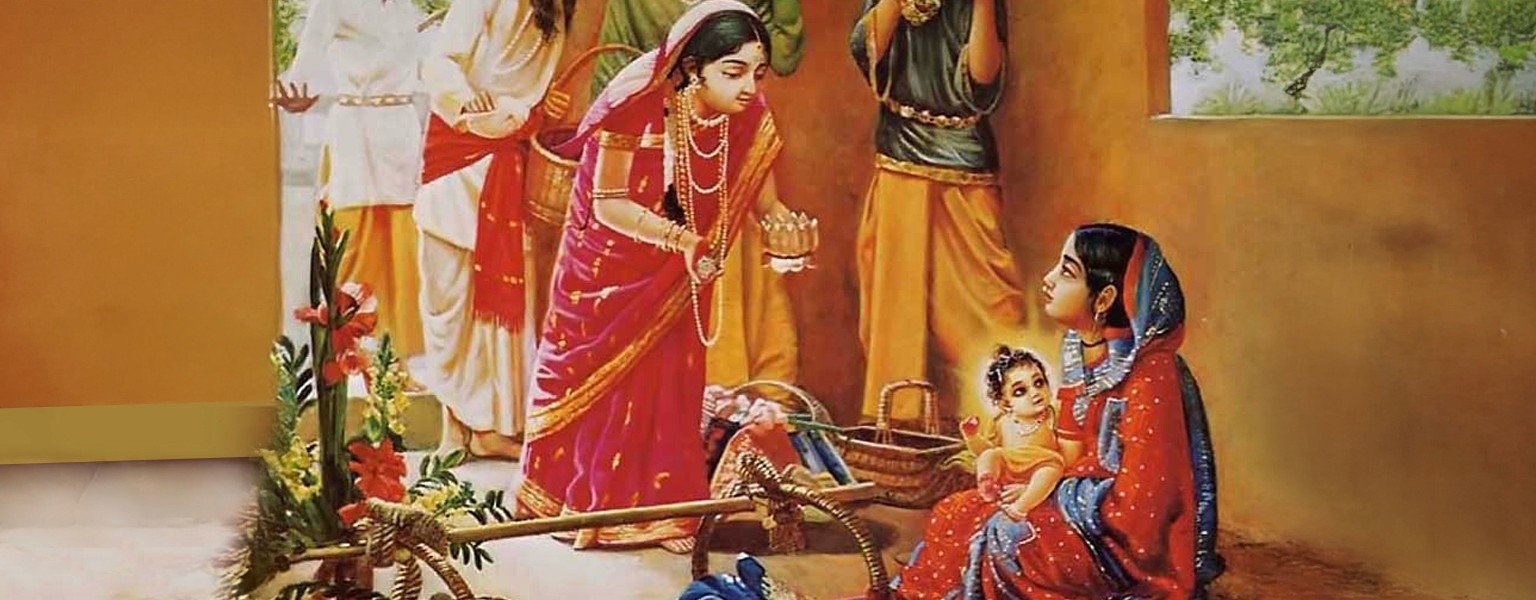
Taksaka
the flying snake who killed Pariksit Maharaja.
Tantras
Vedic literatures consisting mostly of dialogues between Lord Siva and Durga. They contain instructions on Deity worship and other aspects of spiritual practice.
Tapoloka
a heavenly planet.
Tilaka
auspicious clay markings placed by devotees on the forehead and other parts of the body.
Trivikrama
Lord Vamana, the incarnation of the Supreme Lord who encompassed the three worlds in three steps.
Tamo-guna
the mode of ignorance.
Tapasya
austerity; accepting some voluntary inconvenience for a higher purpose.
Tattva-darsi
one who has seen the truth.
Treta-yuga
the second age in the cycle of the four ages of the universe. It lasts 1,296,000 years.
Tulasi
a sacred plant dear to Lord Krsna and worshiped by His devotees.
Taksaka
the flying snake who killed Pariksit Maharaja.
Tamo-guna
the mode of ignorance.
Tantras
Vedic literatures consisting mostly of dialogues between Lord Siva and Durga. They contain instructions on Deity worship and other aspects of spiritual practice.
Tapasya
austerity; accepting some voluntary inconvenience for a higher purpose.
Tapoloka
a heavenly planet.
Tattva-darsi
one who has seen the truth.
Tilaka
auspicious clay markings placed by devotees on the forehead and other parts of the body.
Treta-yuga
the second age in the cycle of the four ages of the universe. It lasts 1,296,000 years.
Trivikrama
Lord Vamana, the incarnation of the Supreme Lord who encompassed the three worlds in three steps.
Tulasi
a sacred plant dear to Lord Krsna and worshiped by His devotees.
Taksaka
the flying snake who killed Pariksit Maharaja.
Tantras
Vedic literatures consisting mostly of dialogues between Lord Siva and Durga. They contain instructions on Deity worship and other aspects of spiritual practice.
Tapoloka
a heavenly planet.
Tilaka
auspicious clay markings placed by devotees on the forehead and other parts of the body.
Trivikrama
Lord Vamana, the incarnation of the Supreme Lord who encompassed the three worlds in three steps.
Tamo-guna
the mode of ignorance.
Tapasya
austerity; accepting some voluntary inconvenience for a higher purpose.
Tattva-darsi
one who has seen the truth.
Treta-yuga
the second age in the cycle of the four ages of the universe. It lasts 1,296,000 years.
Tulasi
a sacred plant dear to Lord Krsna and worshiped by His devotees.
Udara
magnanimous.
Ugrasena
the king of the Yadu dynasty.
Upendra
Vamanadeva, who appears as the younger brother of Indra.
Uttama
the brother of Dhruva Maharaja.
Uddhava
a learned disciple of Brhaspati and confidential friend of Lord Krsna in Dvaraka.
Upanisads
108 philosophical works that appear within the [Vedas].
Urvasi
a woman from the heavenly planets who became enamored of King Pururava.
Uttanapada
the king who was a son of Svayambhuva Manu and the father of Dhruva Maharaja.
Udara
magnanimous.
Uddhava
a learned disciple of Brhaspati and confidential friend of Lord Krsna in Dvaraka.
Ugrasena
the king of the Yadu dynasty.
Upanisads
108 philosophical works that appear within the [Vedas].
Upendra
Vamanadeva, who appears as the younger brother of Indra.
Urvasi
a woman from the heavenly planets who became enamored of King Pururava.
Uttama
the brother of Dhruva Maharaja.
Uttanapada
the king who was a son of Svayambhuva Manu and the father of Dhruva Maharaja.
Udara
magnanimous.
Ugrasena
the king of the Yadu dynasty.
Upendra
Vamanadeva, who appears as the younger brother of Indra.
Uttama
the brother of Dhruva Maharaja.
Uddhava
a learned disciple of Brhaspati and confidential friend of Lord Krsna in Dvaraka.
Upanisads
108 philosophical works that appear within the [Vedas].
Urvasi
a woman from the heavenly planets who became enamored of King Pururava.
Uttanapada
the king who was a son of Svayambhuva Manu and the father of Dhruva Maharaja.
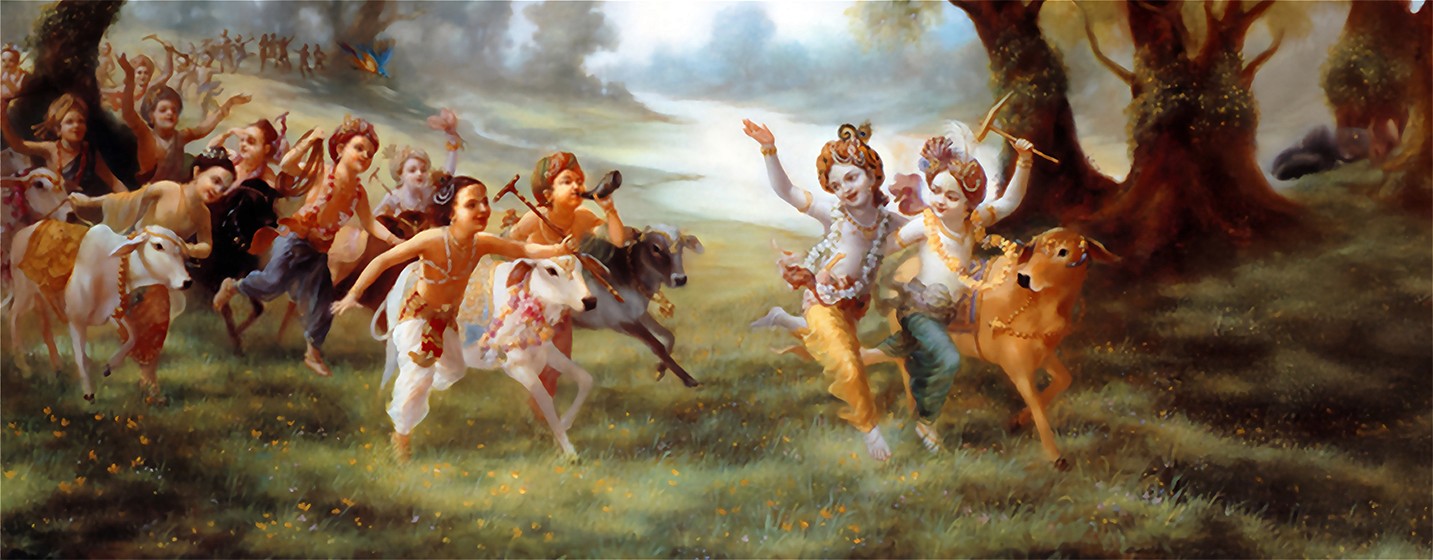
Vaikuntha
the spiritual world, where there is no anxiety.
Vaisnava
a devotee of Lord Visnu, or Krsna.
Vaisnava-dharma
the eternal principle of service to the Supreme Lord, Visnu.
Valmiki
the author of the original [ramayana].
Vanaprastha
one who has retired from family life; the third order of Vedic spiritual life.
Varna-sankara
children conceived without regard for Vedic religious principles; thus, unwanted population.
Varuna
the demigod in charge of the oceans.
Vasudeva
the father of Krsna, and half brother of Nanda Maharaja.
Vedanta-sutra
the philosophical treatise written by Vyasadeva, consisting of aphorisms that embody the essential meaning of the [Upanisads].
Vedic literature
the original four [Vedas,] the [Upanisads, Puranas] and other supplements, and also all scriptures and commentaries written in pursuance of the Vedic conclusion.
Vidya
knowledge.
Vina
a stringed musical instrument.
Virabhadra
the demon created by Lord Siva to destroy the sacrifice of Maharaja Daksa.
Virat-rupa
the universal form of the Supreme Lord, conceived of as the totality of all material manifestations.
Visnu Purana
one of the eighteen [Puranas,] or Vedic historical scriptures.
Visnuloka
the abode of Lord Visnu, the Supreme Personality of Godhead.
Visvakarma
the architect of the demigods.
Visvanatha Cakravarti Thakura
a great Vaisnava spiritual master in the line of Lord Caitanya Mahaprabhu, and a commentator on [ Srimad-Bhagavatam] and [Bhagavad Gita].
Vivaha-yajna
the sacrifice of marriage.
Vraja(bhumi)
Vrndavana
Vyasa-puja
worship of the compiler of the [Vedas,] Vyasadeva; worship of the bona fide spiritual master as the representative of Vyasadeva.
Vairagya
renunciation.
Vaisnava-aparadha
an offense to a devotee of the Lord.
Vaisya
a farmer or merchant; the third Vedic social order.
Vamana
the incarnation of the Supreme Lord as a dwarf [brahmana.] Bali Maharaja surrendered to him.
Varaha
the incarnation of the Supreme Lord as a boar.
Varnasrama-dharma
the Vedic social system of four social and four spiritual orders.
Vasistha
one of the great sages born directly from Lord Brahma. He was a rival of Visvamitra.
Vatsasura
a demon who came to Vrndavana in the form of a calf to kill Krsna but who was instead killed by Him.
Vedas
the four original revealed scriptures ([Rg, Sama, Atharva] and [Yajur].
Vidura
a great devotee who heard [Srimad-Bhagavatam] from Maitreya Muni. He was an incarnation of the demigod Yama.
Vidyapati
an author of Vaisnava poetry who was particularly admired by Lord Caitanya Mahaprabhu.
Vipra
a learned [brahmana].
Viraha
transcendental bliss in separation from the Lord.
Visnu
the Supreme Lord; Lord Krsna's expansions in Vaikuntha and for the creation and maintenance of the material universes.
Visnudutas
the messengers of Lord Visnu, who come at the time of death to take perfected devotees back to the spiritual world.
Visnupriya-devi
the second wife of Lord Caitanya Mahaprabhu, whom He left to accept [sannyasa,] the renounced order of life.
Visvamitra
a prominent sage and rival of Vasistha Muni.
Visvavasu
a leader of the Gandharvas, singers in the heavenly planets.
Vivasvan
the demigod in charge of the sun.
Vrndavana
Krsna's eternal abode, where He fully manifests His quality of sweetness; the village on this earth in which He enacted His childhood pastimes five thousand years ago.
Vyasadeva
the incarnation of Lord Krsna who gave the [Vedas, Puranas, Vedanta-sutra] and [mahabharata] to mankind.
Vaikuntha
the spiritual world, where there is no anxiety.
Vairagya
renunciation.
Vaisnava
a devotee of Lord Visnu, or Krsna.
Vaisnava-aparadha
an offense to a devotee of the Lord.
Vaisnava-dharma
the eternal principle of service to the Supreme Lord, Visnu.
Vaisya
a farmer or merchant; the third Vedic social order.
Valmiki
the author of the original [ramayana].
Vamana
the incarnation of the Supreme Lord as a dwarf [brahmana.] Bali Maharaja surrendered to him.
Vanaprastha
one who has retired from family life; the third order of Vedic spiritual life.
Varaha
the incarnation of the Supreme Lord as a boar.
Varna-sankara
children conceived without regard for Vedic religious principles; thus, unwanted population.
Varnasrama-dharma
the Vedic social system of four social and four spiritual orders.
Varuna
the demigod in charge of the oceans.
Vasistha
one of the great sages born directly from Lord Brahma. He was a rival of Visvamitra.
Vasudeva
the father of Krsna, and half brother of Nanda Maharaja.
Vatsasura
a demon who came to Vrndavana in the form of a calf to kill Krsna but who was instead killed by Him.
Vedanta-sutra
the philosophical treatise written by Vyasadeva, consisting of aphorisms that embody the essential meaning of the [Upanisads].
Vedas
the four original revealed scriptures ([Rg, Sama, Atharva] and [Yajur].
Vedic literature
the original four [Vedas,] the [Upanisads, Puranas] and other supplements, and also all scriptures and commentaries written in pursuance of the Vedic conclusion.
Vidura
a great devotee who heard [Srimad-Bhagavatam] from Maitreya Muni. He was an incarnation of the demigod Yama.
Vidya
knowledge.
Vidyapati
an author of Vaisnava poetry who was particularly admired by Lord Caitanya Mahaprabhu.
Vina
a stringed musical instrument.
Vipra
a learned [brahmana].
Virabhadra
the demon created by Lord Siva to destroy the sacrifice of Maharaja Daksa.
Viraha
transcendental bliss in separation from the Lord.
Virat-rupa
the universal form of the Supreme Lord, conceived of as the totality of all material manifestations.
Visnu
the Supreme Lord; Lord Krsna's expansions in Vaikuntha and for the creation and maintenance of the material universes.
Visnu Purana
one of the eighteen [Puranas,] or Vedic historical scriptures.
Visnudutas
the messengers of Lord Visnu, who come at the time of death to take perfected devotees back to the spiritual world.
Visnuloka
the abode of Lord Visnu, the Supreme Personality of Godhead.
Visnupriya-devi
the second wife of Lord Caitanya Mahaprabhu, whom He left to accept [sannyasa,] the renounced order of life.
Visvakarma
the architect of the demigods.
Visvamitra
a prominent sage and rival of Vasistha Muni.
Visvanatha Cakravarti Thakura
a great Vaisnava spiritual master in the line of Lord Caitanya Mahaprabhu, and a commentator on [ Srimad-Bhagavatam] and [Bhagavad Gita].
Visvavasu
a leader of the Gandharvas, singers in the heavenly planets.
Vivaha-yajna
the sacrifice of marriage.
Vivasvan
the demigod in charge of the sun.
Vraja(bhumi)
Vrndavana
Vrndavana
Krsna's eternal abode, where He fully manifests His quality of sweetness; the village on this earth in which He enacted His childhood pastimes five thousand years ago.
Vyasa-puja
worship of the compiler of the [Vedas,] Vyasadeva; worship of the bona fide spiritual master as the representative of Vyasadeva.
Vyasadeva
the incarnation of Lord Krsna who gave the [Vedas, Puranas, Vedanta-sutra] and [mahabharata] to mankind.
Vaikuntha
the spiritual world, where there is no anxiety.
Vaisnava
a devotee of Lord Visnu, or Krsna.
Vaisnava-dharma
the eternal principle of service to the Supreme Lord, Visnu.
Valmiki
the author of the original [ramayana].
Vanaprastha
one who has retired from family life; the third order of Vedic spiritual life.
Varna-sankara
children conceived without regard for Vedic religious principles; thus, unwanted population.
Varuna
the demigod in charge of the oceans.
Vasudeva
the father of Krsna, and half brother of Nanda Maharaja.
Vedanta-sutra
the philosophical treatise written by Vyasadeva, consisting of aphorisms that embody the essential meaning of the [Upanisads].
Vedic literature
the original four [Vedas,] the [Upanisads, Puranas] and other supplements, and also all scriptures and commentaries written in pursuance of the Vedic conclusion.
Vidya
knowledge.
Vina
a stringed musical instrument.
Virabhadra
the demon created by Lord Siva to destroy the sacrifice of Maharaja Daksa.
Virat-rupa
the universal form of the Supreme Lord, conceived of as the totality of all material manifestations.
Visnu Purana
one of the eighteen [Puranas,] or Vedic historical scriptures.
Visnuloka
the abode of Lord Visnu, the Supreme Personality of Godhead.
Visvakarma
the architect of the demigods.
Visvanatha Cakravarti Thakura
a great Vaisnava spiritual master in the line of Lord Caitanya Mahaprabhu, and a commentator on [ Srimad-Bhagavatam] and [Bhagavad Gita].
Vivaha-yajna
the sacrifice of marriage.
Vraja(bhumi)
Vrndavana
Vyasa-puja
worship of the compiler of the [Vedas,] Vyasadeva; worship of the bona fide spiritual master as the representative of Vyasadeva.
Vairagya
renunciation.
Vaisnava-aparadha
an offense to a devotee of the Lord.
Vaisya
a farmer or merchant; the third Vedic social order.
Vamana
the incarnation of the Supreme Lord as a dwarf [brahmana.] Bali Maharaja surrendered to him.
Varaha
the incarnation of the Supreme Lord as a boar.
Varnasrama-dharma
the Vedic social system of four social and four spiritual orders.
Vasistha
one of the great sages born directly from Lord Brahma. He was a rival of Visvamitra.
Vatsasura
a demon who came to Vrndavana in the form of a calf to kill Krsna but who was instead killed by Him.
Vedas
the four original revealed scriptures ([Rg, Sama, Atharva] and [Yajur].
Vidura
a great devotee who heard [Srimad-Bhagavatam] from Maitreya Muni. He was an incarnation of the demigod Yama.
Vidyapati
an author of Vaisnava poetry who was particularly admired by Lord Caitanya Mahaprabhu.
Vipra
a learned [brahmana].
Viraha
transcendental bliss in separation from the Lord.
Visnu
the Supreme Lord; Lord Krsna's expansions in Vaikuntha and for the creation and maintenance of the material universes.
Visnudutas
the messengers of Lord Visnu, who come at the time of death to take perfected devotees back to the spiritual world.
Visnupriya-devi
the second wife of Lord Caitanya Mahaprabhu, whom He left to accept [sannyasa,] the renounced order of life.
Visvamitra
a prominent sage and rival of Vasistha Muni.
Visvavasu
a leader of the Gandharvas, singers in the heavenly planets.
Vivasvan
the demigod in charge of the sun.
Vrndavana
Krsna's eternal abode, where He fully manifests His quality of sweetness; the village on this earth in which He enacted His childhood pastimes five thousand years ago.
Vyasadeva
the incarnation of Lord Krsna who gave the [Vedas, Puranas, Vedanta-sutra] and [mahabharata] to mankind.
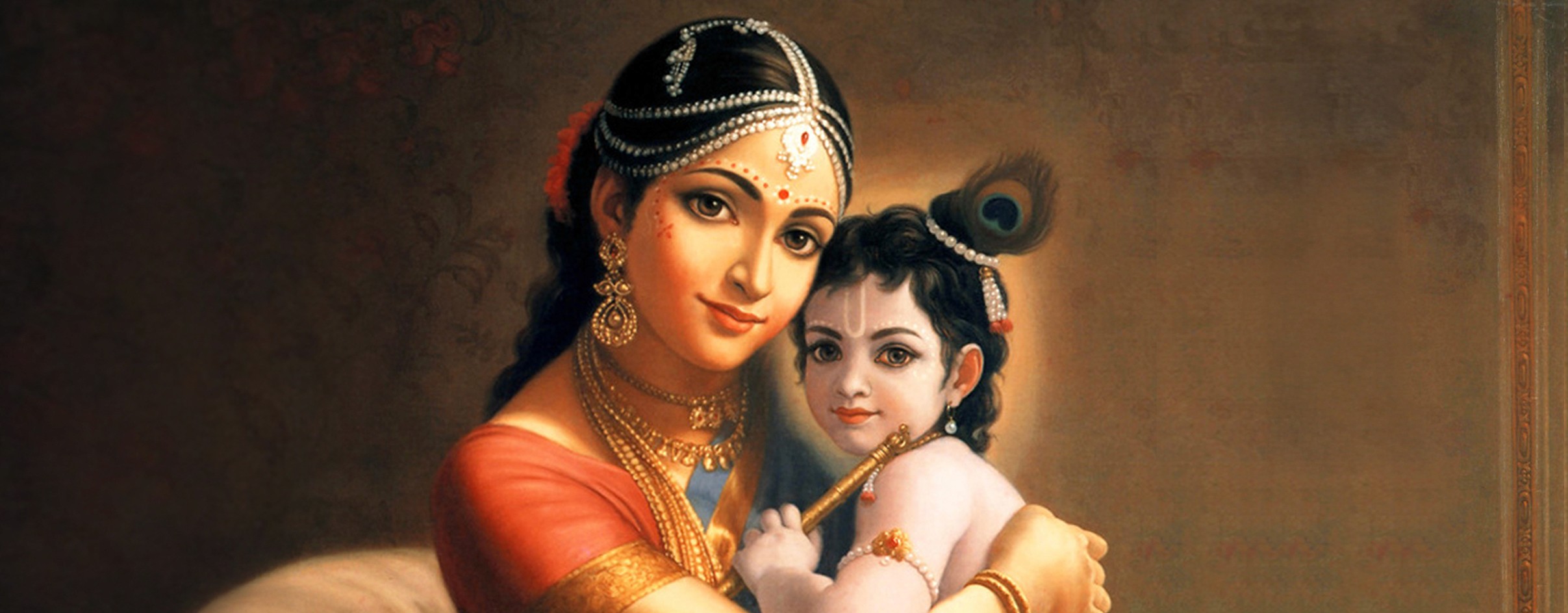
Yadu dynasty
the dynasty in which Lord Krsna appeared.
Yajna
a Vedic sacrifice; also, the Supreme Lord, the goal and enjoyer of all sacrifices.
Yama
the process of controlling the senses.
Yamunacarya
a great Vaisnava spiritual master of the Sri [sampradaya].
Yasoda-nandana
the Supreme Lord, Krsna, who is the darling son of Yasoda.
Yoga-nidra
the mystic slumber of Lord Visnu.
Yogamaya
the internal, spiritual energy of the Supreme Lord; also, its personification as Krsna's younger sister.
Yogi
a transcendentalist striving for union with the Supreme.
Yuga-dharma
the religion for the age.
Yajamana
the sponsor for whom a Vedic sacrifice is performed.
Yajur Veda
one of the four [Vedas,] the original revealed scriptures spoken by the Lord Himself.
Yamadutas
the messengers of Yamaraja, the lord of death.
Yasoda
the foster mother of Krsna, who was the Queen of Vraja and wife of Maharaja Nanda.
Yoga
spiritual discipline undergone to link oneself with the Supreme.
Yoga-siddhis
mystic powers.
Yogesvara
the Supreme Lord, Krsna, the supreme master of all mystic power.
Yudhisthira
the eldest of the five Pandava brothers; he ruled the earth after the Kuruksetra war.
Yuktavairagya
real renunciation in which one utilizes everything in the service of the Supreme Lord.
Yadu dynasty
the dynasty in which Lord Krsna appeared.
Yajamana
the sponsor for whom a Vedic sacrifice is performed.
Yajna
a Vedic sacrifice; also, the Supreme Lord, the goal and enjoyer of all sacrifices.
Yajur Veda
one of the four [Vedas,] the original revealed scriptures spoken by the Lord Himself.
Yama
the process of controlling the senses.
Yamadutas
the messengers of Yamaraja, the lord of death.
Yamunacarya
a great Vaisnava spiritual master of the Sri [sampradaya].
Yasoda
the foster mother of Krsna, who was the Queen of Vraja and wife of Maharaja Nanda.
Yasoda-nandana
the Supreme Lord, Krsna, who is the darling son of Yasoda.
Yoga
spiritual discipline undergone to link oneself with the Supreme.
Yoga-nidra
the mystic slumber of Lord Visnu.
Yoga-siddhis
mystic powers.
Yogamaya
the internal, spiritual energy of the Supreme Lord; also, its personification as Krsna's younger sister.
Yogesvara
the Supreme Lord, Krsna, the supreme master of all mystic power.
Yogi
a transcendentalist striving for union with the Supreme.
Yudhisthira
the eldest of the five Pandava brothers; he ruled the earth after the Kuruksetra war.
Yuga-dharma
the religion for the age.
Yuktavairagya
real renunciation in which one utilizes everything in the service of the Supreme Lord.
Yadu dynasty
the dynasty in which Lord Krsna appeared.
Yajna
a Vedic sacrifice; also, the Supreme Lord, the goal and enjoyer of all sacrifices.
Yama
the process of controlling the senses.
Yamunacarya
a great Vaisnava spiritual master of the Sri [sampradaya].
Yasoda-nandana
the Supreme Lord, Krsna, who is the darling son of Yasoda.
Yoga-nidra
the mystic slumber of Lord Visnu.
Yogamaya
the internal, spiritual energy of the Supreme Lord; also, its personification as Krsna's younger sister.
Yogi
a transcendentalist striving for union with the Supreme.
Yuga-dharma
the religion for the age.
Yajamana
the sponsor for whom a Vedic sacrifice is performed.
Yajur Veda
one of the four [Vedas,] the original revealed scriptures spoken by the Lord Himself.
Yamadutas
the messengers of Yamaraja, the lord of death.
Yasoda
the foster mother of Krsna, who was the Queen of Vraja and wife of Maharaja Nanda.
Yoga
spiritual discipline undergone to link oneself with the Supreme.
Yoga-siddhis
mystic powers.
Yogesvara
the Supreme Lord, Krsna, the supreme master of all mystic power.
Yudhisthira
the eldest of the five Pandava brothers; he ruled the earth after the Kuruksetra war.
Yuktavairagya
real renunciation in which one utilizes everything in the service of the Supreme Lord.


The mind is the seat of all material desires.


The mind is the seat of all material desires.
The mind is the seat of all material desires.